
Bookmarks: “The Left and the Lucky” by Willy Vlautin
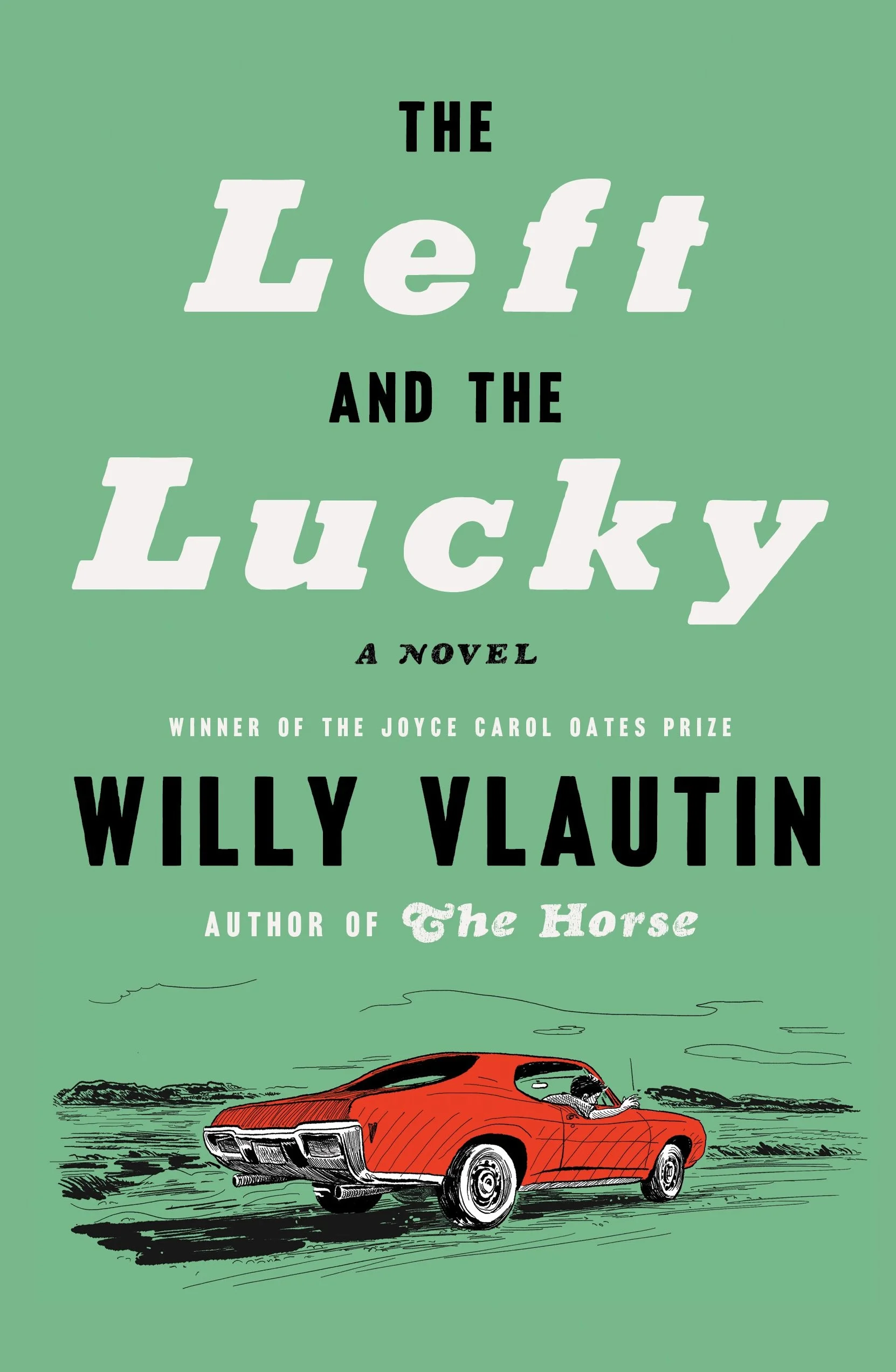
Published May 2026, HarperCollins | Review By Drew Foster
To say I’ve just been killing time the past two years awaiting Willy Vlautin’s next novel would be only a slight exaggeration.
I discovered Vlautin when I came across “The Horse” at Nāʻālehu Public Library. I was searching for something salty. The inside jacket teased a story about “a grizzled man in his sixties (who) survives on canned soup, instant coffee, and memories of his ex-wife, friends and family he’s lost, and his life as a touring musician.” Yeah, I could get down with that.
And down I got. I blew through “The Horse” and proceeded to read Vlautin’s other six novels in quick succession. He employs a deceptively simple style — accessible vocabulary, compact sentences, stories often unfolding in a single narrative thread — that belies master character building and keen social observation.
Vlautin’s protagonists are mostly blue-collar white folks, often desperate and dysfunctional. They live in the low-end sections of Portland or Reno. They are children in unstable homes, alcoholics, PTSD-addled veterans, aspiring boxers, overworked nurses. They’re everyday folks drowning in debt, caring for disabled family members, disappearing into their imaginations, fleeing tragic pasts. And they’re always painted with compassion, honesty and love.
In that vein, his newest book, “The Left and the Lucky,” is vintage Vlautin. The novel follows Eddie Wilkens, a housepainter in Portland, Ore., whose wife recently left him; and 8-year-old Russell, a sensitive boy searching for love and stability. Eddie’s a hard worker who spends his free time fixing up an old Pontiac LeMans. Russell lives next door with his mother, grandmother and older brother, Curtis, a delinquent who routinely torments Russell. His mother is a stripper who works late hours, and his grandmother seems clinically depressed following the death of her husband. Neither adult can protect Russell from Curtis’ violent and sometimes sadistic whims. So Russell spends much of his time at Eddie’s house. What develops is a caring relationship between two wounded souls navigating their messy lives. The pair find strength and hope in one another.
The cast is rounded out by Eddie’s employees: Houston, a loafing drunk who provides comic relief; and Cordarrel, a broad-shouldered Chicago transplant who initially seems a know-it-all blowhard but eventually reveals himself to be a man sadly past his prime. “The Left and the Lucky” is Vlautin’s funniest novel, due mostly to Houston’s haplessness.
But as much as I love Vlautin, his newest book felt at times disjointed, and some characters seemed underdeveloped. Russell’s mother could have provided a harder edge, and Eddie lacked the dysfunction found in almost all the main characters of Vlautin’s other novels. That dysfunction, as depressing as it sounds, is a real driver of Vlautin’s work. He taps into blue-collar malaise in a way few contemporary writers do. Eddie is responsible, stable and professional. Even kind of boring. Eddie’s gloom lurks just beneath the surface, and it isn’t truly exposed until the novel’s end. His tortured soul could have been revealed and developed much earlier.
Another stumbling block was the novel’s beginning, where Curtis and his mother have a contentious meeting with the parents of a girl Curtis has gotten pregnant. It’s a strong opening that creates an immediate tension, but that plotline is quickly forgotten and goes unaddressed for the next hundred pages. It’s an odd start.
All that said, I still recommend “The Left and the Lucky.” But I give a stronger recommendation to Vlautin himself. Check him out if you like imperfect characters representing America’s working class. Start with “Lean on Pete,” “Don’t Skip Out on Me,” “The Night Always Comes” or “The Horse.” If you dig his work, give “The Left and the Lucky” a try. I also recommend his music. His current band, The Delines, has a soulful rock style with lyrics that tell the same stories as Vlautin’s books.
