
Kaʻū Kaukau: Pork Lūʻau Stew
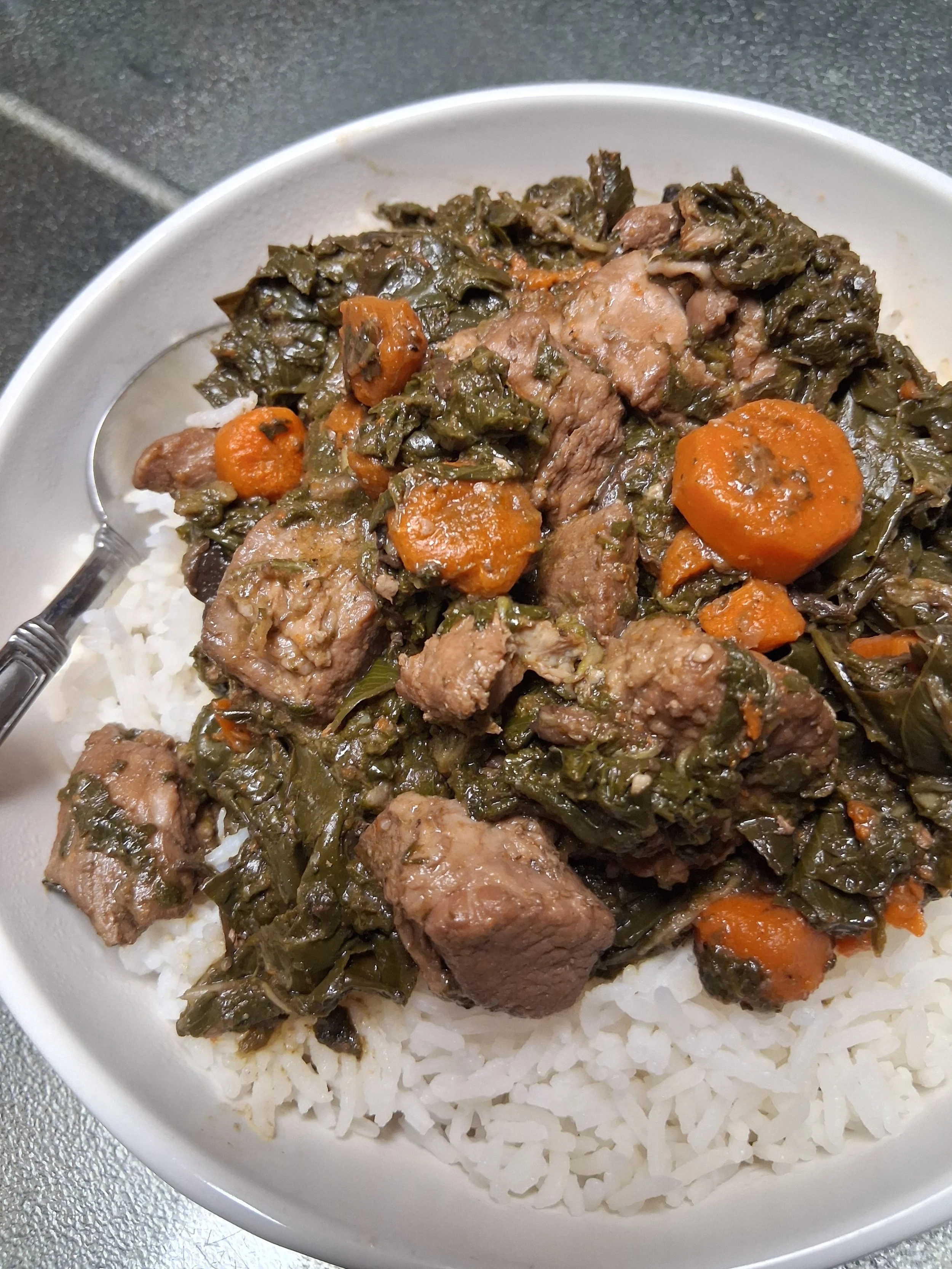
Recipe & Photo By Tim DeLozier
Lūʻau Stew is a traditional Hawaiian dish made by cooking fresh lūʻau leaves (which come from the taro or kalo plant) with water and a bit of salt. Lūʻau stew can be cooked plain/vegetarian or with squid, chicken, beef, or pork. Lūʻau stew falls into the category of traditional Hawaiian foods that include kalua pork, lomi lomi salmon, lau lau, haupia, and kūlolo. It’s a flavorful, saucy stew that you eat with rice and poi. This is an adaptation of the traditional recipe.
Ingredients:
• 1 lb pork shoulder or butt cut into cubes
• 2 tablespoons oil (olive, vegetable or butter)
• 2-3 dozen (about 1 lb) large taro leaves, washed & chopped into large pieces*
• 1/2 cup water
• 2 tablespoons salt
• Salt & pepper to taste
Optional Additional Ingredients:
• 3-4 carrots, peeled & sliced thick
• 2-3 purple sweet potatoes (ube), peeled & cubed*
• 12-15 large mushrooms, sliced
• 1 large onion, peeled & sliced
Directions: In a large pot, cook cubed pork, (and optional sliced onions and mushrooms) in oil and 2 tablespoons of salt over medium high heat until browned. Add water and taro leaves and optional carrot slices. Bring to a boil then reduce heat to low. Cover and simmer for 2-3 hours, stirring every 30 minutes. Once taro leaves are fully cooked** and meat is tender, add salt and pepper to taste. If adding ube, steam or boil cubed ube in a separate pot until soft. Stir cooked ube into stew before serving (if you add ube too early, it will disintegrate and dissolve). Alternate preparation: after browning cubed pork, transfer to a crock pot then add taro leaves and carrots, cover and cook medium low for 2-3 hours, stirring every 30 minutes. Serve hot over steamed rice and drizzle with shoyu if desired.
Important Notes:
*If you have sensitive skin, it is highly recommended to wear gloves when handling raw taro leaves and ube to avoid skin irritation.
**Taro leaves contain oxalic acid crystals, which if not thoroughly cooked can cause throat and mouth irritation and swelling (“itchy mouth/throat”). Be sure to cook taro leaves for at least 2 hours to break down these crystals before eating.
