
Lāʻau Letters: Native Plants of Kaʻū (Alaheʻe)
By Jodie Rosam
Artwork by Joan Yoshioka
Aloha to all of the plant lovers of Kaʻū – we are so grateful for the opportunity to continue to share about all of the amazing native plants of Kaʻū. If you are a new reader, welcome to Lāʻau Letters: Native Plants of Kaʻū. Each month you can read about Kaʻū’s native plants and their moʻolelo, uses, preferred habitats, opportunities to adopt them for stewardship, and other fun tidbits. This column really is a place for you to connect with new plants you may not know or to reignite your relationship with ones you already do. Because let’s face it – we need them more than they need us! Hawaiʻi is home to so many endemic (only found here) and endangered and truly unique plant species. Not only do they perform ecological and ecosystem services, but they connect us to who we are and where we came from. I encourage you to not only read about and research the plants that interest you (hopefully all of them), but also to seek them out (if possible, safely and legally) - smell them, touch them, observe them, listen to them. Dive deeply into what they represent to you and form the relationship that keeps us thriving. And please, use a Hawaiian dictionary or wehewehe.org to dissect the names to really uncover all of the connections these plants have to the universe, including all of us. Enjoy!
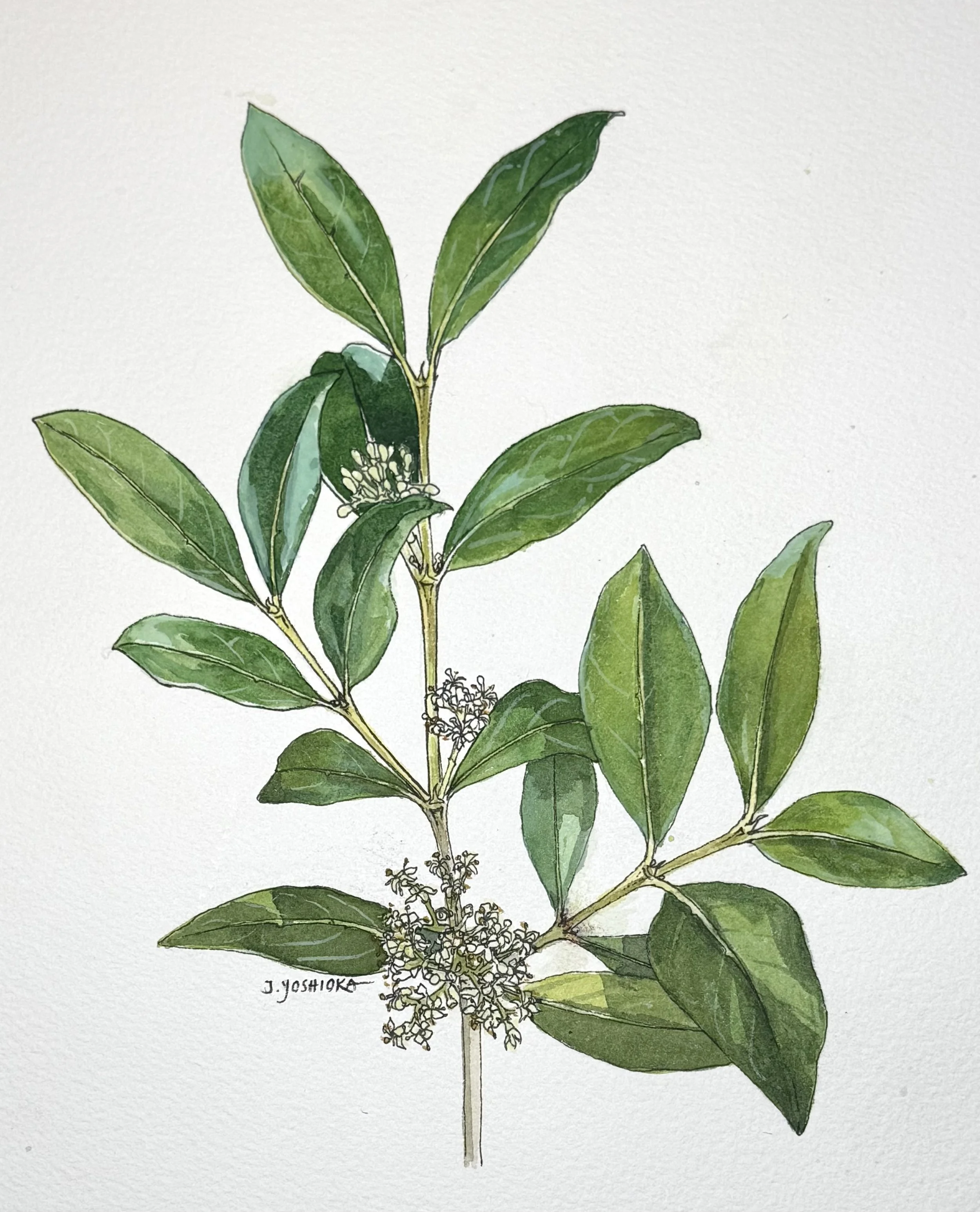
Alaheʻe (Psydrax odorata)
Hauʻoli Makahiki Hou! This month, I want to share a fairly common native species of tree that is indigenous to Hawaiʻi: Alaheʻe. You can find Alaheʻe across all of Kaʻū’s ahupuaʻa in dry shrub lands, dry forests, mesic forests, and even in mesic-wet forests from about 3,500’ elevation to nearly sea level. Alaheʻe typically grows as a medium-sized tree, but the scattered Alaheʻe in the dry shrub lands and lava flows tend to grow more papa (flatter) and more sprawled out. I chose Alaheʻe to share this first month of 2026 for a few reasons: (1) it was a special request several months back, (2) it is a very common plant friend that often gets underappreciated, and (3) it is the time of year that Alaheʻe are blooming!
Alaheʻe are easy to identify once you get an eye for them. Their trunks are straight and tend to be a charcoal color with white horizontal bands. Their branches are arranged in an almost Christmas tree pattern, and would make a better indoor holiday tree than the ones you get at big box stores that often harbor invasive species (and cost way too much money!). Alaheʻe have beautifully glossy leaves that tend to keep their bright sheen even during the worst droughts. In fact, when all the ekoa or haole koa (a very invasive species) begins to lose its leaves during Kaʻū’s dry periods, Alaheʻe stands out amongst the invasive plant crowd, looking healthy and hearty. You can especially witness this along the highway between Honuʻapo and Punaluʻu. Alaheʻe bloom in the winter and, being in the Rubiaceae or coffee family, produce white flowers that are incredibly fragrant (another etymology opportunity for you to enjoy). To me, they smell like citrus flowers with a dash of vanilla bean. The flowers are so fragrant, you can smell them from quite a distance. I encourage you to drive with your windows down along that stretch of highway when they are in bloom so you can experience the sweet aroma that is unique to Alaheʻe.
Alaheʻe is a very strong and hard wood that was used to make spears and other fishing implements. Notice anything ocean-related in its name? Alaheʻe was used to make spears to catch heʻe (or octopus). The long, straight trunks of Alaheʻe make great ʻōʻō or digging sticks, and the wood was also used to make adze blades to cut softer woods like Wiliwili and Kukui. Alaheʻe leaves also make a dark brown (nearly black) dye. Next time you are on Oʻahu, visit the Bishop Museum to see the beautiful bowl fashioned out of Alaheʻe wood. Alaheʻe should be more commonly-used in landscaping, both home use and commercial scale. They are drought tolerant, respond well to pruning and shaping (so they can be trees or dense hedges), and are an easy way to showcase native species in urban areas. Before you think of planting mock orange or even Panax for privacy hedges, consider Alaheʻe. They are easy to propagate and can be purchased from local nurseries such as Future Forests Nursery, LLC in Kealakehe. Please take the time to meet Alaheʻe, find it in your neighborhood or even along the highway, get paʻa with identifying it among the landscape, and appreciate the smells of its flowers. Then PLANT IT and discourage your friends from bulldozing it!
As always, if you have any questions feel free to ask me: jodie.rosam@gmail.com.
About the artist: Joan Yoshioka is a conservationist at heart and has dedicated her life to preserving the native plants and animals of Hawaiʻi through her work with various federal, state and private organizations for 30-plus years. She describes herself as an outdoor-lovin' optimist, biologist/botanist, and habitual creator of art-stuff. She believes the key to our most fundamental and truest part of ourselves is found in nature and she constantly draws on it for inspiration.
About the author: Jodie Rosam has a deep love for native plants and a passion for exploration, with more than 20 years experience stewarding Hawaiʻi’s forests. She works for The Nature Conservancy and with Hawaiʻi Wildlife Fund, and serves on many non-profit boards. Jodie wears her love for Hawaiʻi’s native plants on her sleeve, and thrives on sparking a love for nature in her children, making new friends in the plant kingdom, and sharing her passion with others. When she is not in the forest, you can find Jodie rooting for her boys at baseball or keeping their fishing pole hooks baited! Feel free to send questions to her email: jodie.rosam@gmail.com.
