
Saving the Honuʻea
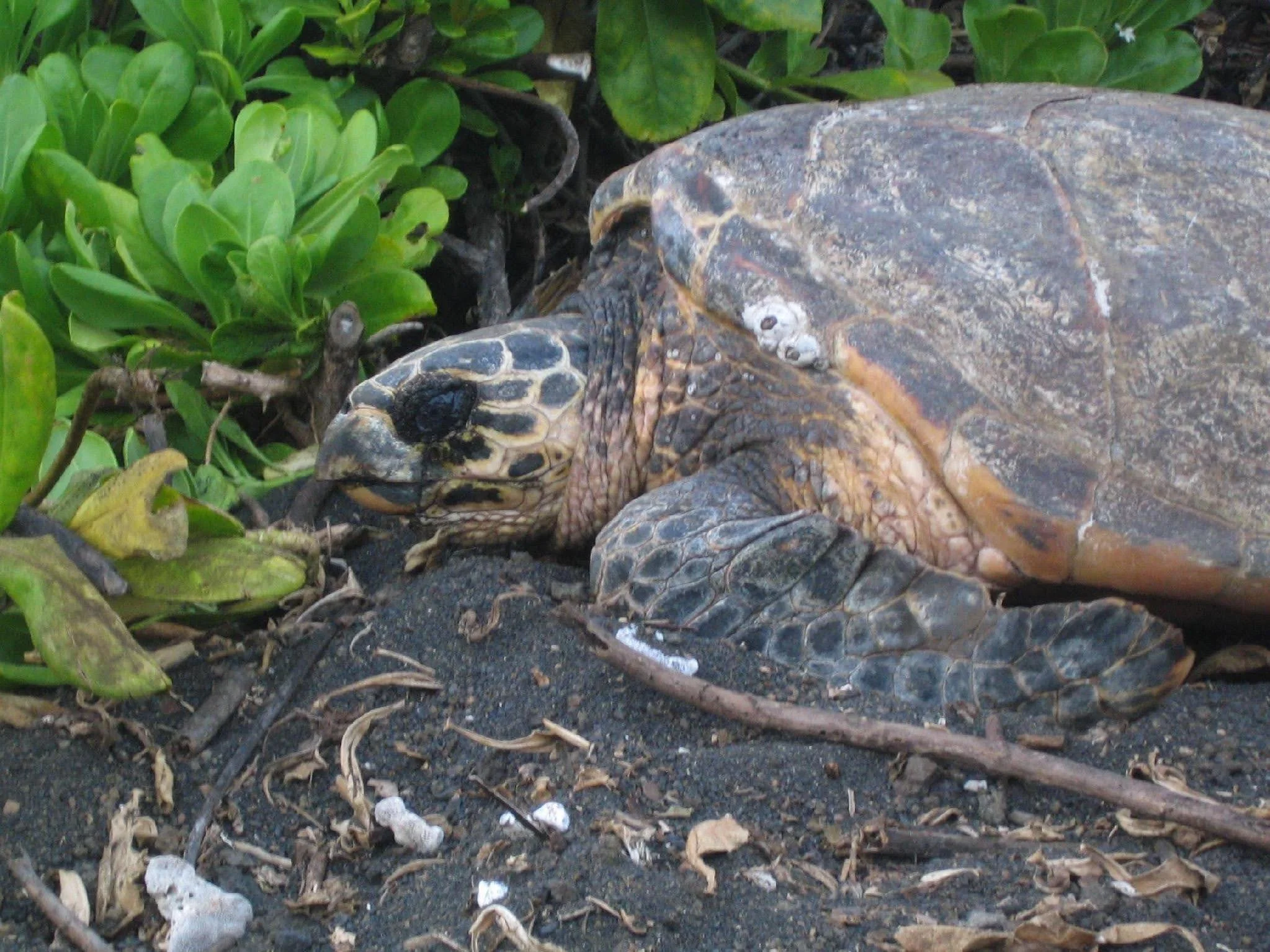
Female honuʻea resting after laying a nest — By National Park Service
By Tara Lanzer
The 2025 nesting season was an eventful one for the critically endangered honuʻea (hawksbill sea turtles) of Hawaiʻi Island. The Hawaiʻi Island Hawksbill Project (a collaborative project between the University of Hawaiʻi Pacific Cooperative Studies Unit and Hawaiʻi Volcanoes National Park) documented a nearly record-breaking total of 80 honuʻea nests along the southern coast of Hawaiʻi Island, with most nests found within the district of Kaʻū. Although this number might seem low, honuʻea occur in much smaller numbers than the more commonly seen honu (green sea turtle), making every nest an important find.
Many of the nests documented in this season were found with the help of local community members who reported nesting activity they observed while visiting local beaches. Locating nests is essential for protection against non-native predators and for understanding the current state of this small population, so we are extremely grateful for these reports!
Want to help? The nesting season runs from April through December, and our small team cannot be everywhere to see all of the activity before evidence is erased via the high tide, wind, or footprints. The most significant way that you can help is to report any signs of nesting activity that you observe. Evidence of nesting activity includes adult turtle tracks (pictured below), hatchling tracks, disturbed areas of sand, buried vegetation, and exposed/fragmented eggs from predation. It is important to note that while honu also leave behind tracks in the sand, they are primarily resting on the beach rather than nesting. Their tracks usually only reach just above the high tide line, while honuʻea tracks typically extend to the vegetation line of the beach. To make a report, you can fill out an online form on our website at hawaiiislandhawksbillproject.org or call our office at (808) 985-6090.
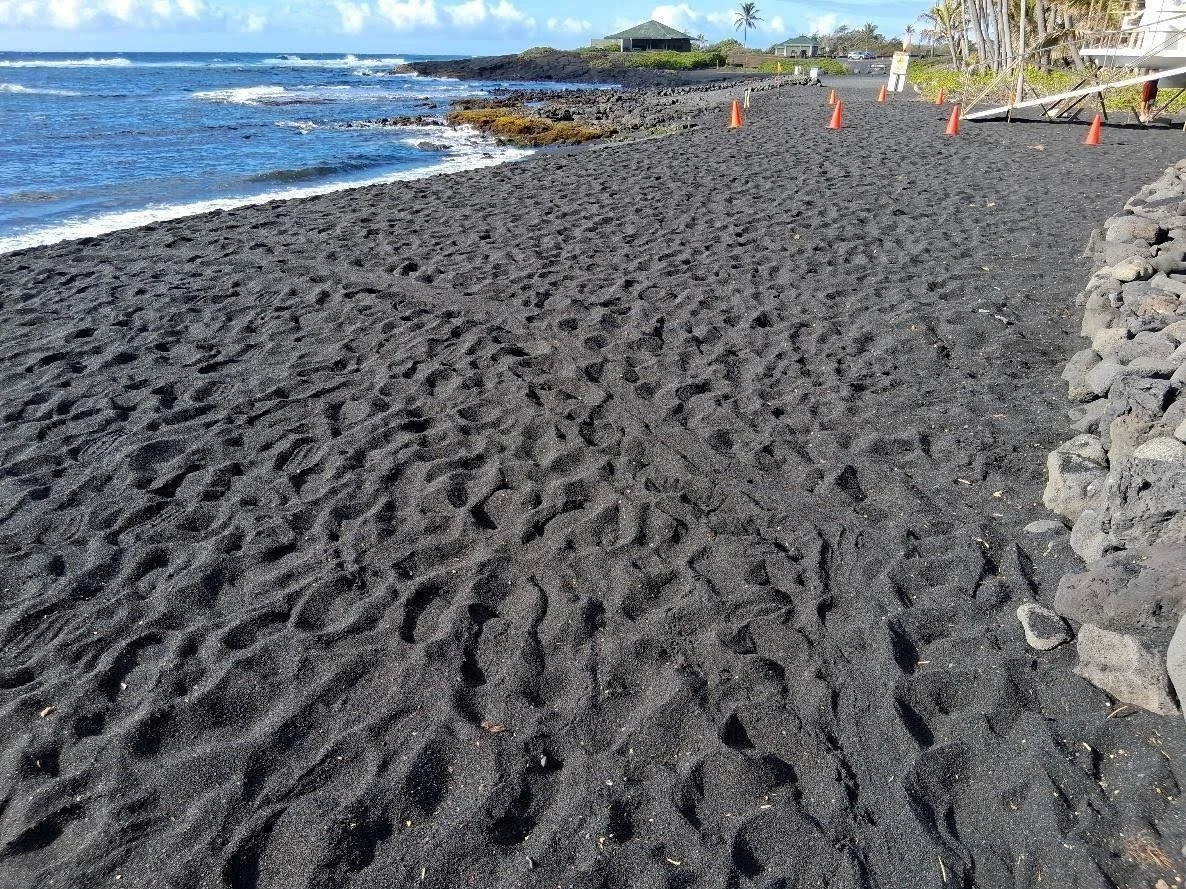
Photo of adult turtle tracks at Punaluʻu — By Tim DeLozier
