
Back Yard Beekeeping: A Fun and Fruitful Hobby
By Alison Yahna
Last month, we talked about keeping bee swarms away from your home. This month, we will talk about inviting them in! Colony Collapse in the early 2000s raised our consciousness around the importance of honeybees and other pollinators. The resulting desire to ‘save the bees’ sparked the biggest renaissance in small-scale backyard and hobby beekeeping in history. Today, backyard hives can be found from a sixth-floor balcony in Brooklyn to a glorious rose garden in Discovery Harbor. Like backyard chickens, keeping bees requires time, education, and equipment. But with a little effort and a dash of bravery, keeping bees can be an immensely rewarding experience.
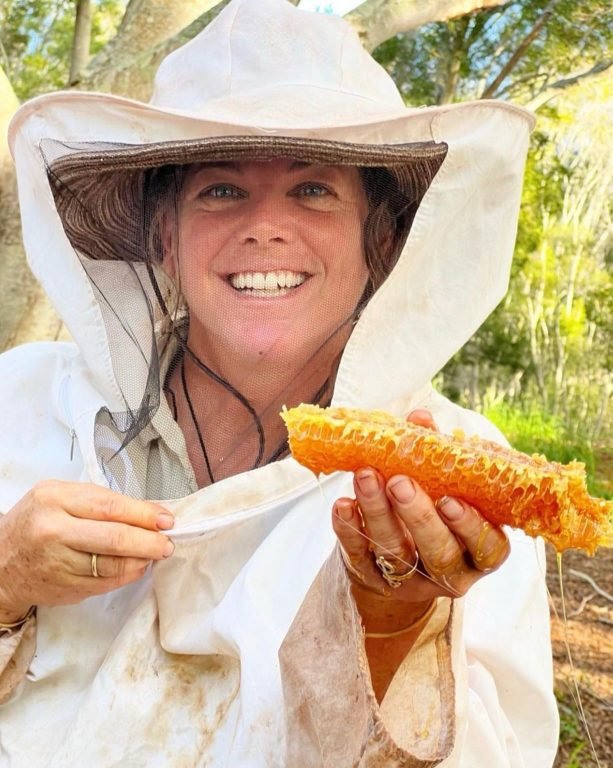
First, a warning. ‘Bee Fever’ is used to describe those who, after exposure to a honeybee swarm or colony, become obsessed with them. The author has suffered a severe case of Bee Fever for over 25 years. Give her the slightest opportunity and she will talk for hours on the mating flight of Virgin Queens or the esoteric symbolism of the Egyptian Pharaoh’s beehive-shaped crown. Bee Fever can strike either gender and any age, and will test the patience and understanding of friends and family. If they are lucky, their forbearance will be rewarded by a jar of the most sublime food known to the human palate.
If your interest in bees is limited to the honey they produce, I would recommend simply buying some of the delicious varieties available at our Farmer’s markets. If you want to earn an income from keeping bees, I encourage you to seek employment with one of the many commercial operations in Hawai’i — the pay is good and the experience invaluable. But if the bees are calling you to enter into a relationship, and you are willing to accommodate their needs and take some stings, I encourage you to pursue the dream. Before you dive in, consider the following:
What do you want from Bees?
A hive can produce a few gallons of honey each year, but bees produce more than honey. They pollinate garden and orchard plants, and bring more fertility to your land. They also produce propolis and beeswax. Some people actually keep a hive for the stings! They use the venom to treat autoimmune diseases such as arthritis and multiple sclerosis (MS). Others simply enjoy the humming presence of bees in their garden.
What kind of space/forage do you have?
In most places in Hawai’i, it is legal to keep a few hives on your property, even on a 1/4 acre lot. However, for the sake of neighbors, passersby, livestock, and pets, it is important to make sure your space is a safe and appropriate place for a hive. A quiet corner of the yard, with the hive entrance facing a tall fence or thick hedge, will push bees up and over people’s heads as they fly in and out. Make sure pets and livestock are not confined in kennels or tied out near the hives, as they can be attacked and killed. Bees need water to drink and ideally a variety of flowering plants for forage. Like other insects, honeybees are drawn to light at night, so hives should be placed away from porches or other bright lights.
Honeybees can travel 3 miles from their hive to gather pollen and nectar. Survey the potential sources of nectar and pollen in your area. Also, look for factors that may harm or kill your hives, such as agricultural crops that are sprayed with pesticides/herbicides, or residential use of these poisons. Another discouraging factor could be the presence of large commercial bee yard(s) within ½ mile of your property, which can transmit diseases and parasites, and strip the food resources your bees will need to thrive.
What style of Hive Body do you want?
Keeping bees requires relatively little equipment. In addition to a bee house, called a ‘hive body’, you will need a couple of hive tools, a smoker, and a good bee suit to get started.
The two most common hive styles in Hawai’i are the conventional box-shaped Langstroth hive and the increasingly popular Top-Bar horizontal hive. I am a big proponent of the Top-Bar hive for beginners for a number of reasons; they can be DIY built and less expensive to purchase, are easier and less invasive to manage, and are a more natural home for the bees.
Avoid gimmicky options like the expensive Flow Hive. If you love bees but don’t want to harvest honey, consider a beautiful log-hive or old-fashioned skep (woven basket) hive as a functional and decorative element in your garden landscape.
Where will you get your bees?
Typically, bees are purchased as a ‘nuc’ (nucleus) hive consisting of four or five combs of bees and brood (larval bees) and a healthy laying Queen. You can purchase a nuc from a local beekeeper. Bees that are ‘treatment-free’ are more likely to be mite and disease-resistant.
Another source of bees is to catch or attract a swarm to your hive body. Swarm lure is available through bee supply stores and will help scout bees locate your hive. Sometimes you can find full-size bee hives for sale. Unless the seller delivers, you will have to lift and move the heavy hive full of bees and honey. I highly recommend working with an experienced beekeeper in this event .
Education and Mentorship
There are a multitude of educational materials available to aspiring beekeepers, from books to YouTube videos to online courses. Much of it is low quality, contradictory or geared for commercial operations. Look for “natural, regenerative and/or backyard beekeeping’ information which will be most appropriate for your needs.
I recommend Intuitive Treatment-Free Tropical Beekeeping, by Big Island master beekeeper Jen Rasmussen. But no amount of reading or videos can prepare you for the hands-on experience of opening a hive full of thousands of bees, never mind making sense of what you see inside. Before investing a lot of time and money, take a beekeeping tour, course and/or find a mentor who will offer some real-world hands-on experience and help with your hives for at least the first six months. Several Island beekeepers provide these services, including the author, who can be contacted through her website, ArtemisSmiles.com.
