Conservation grant brings TNC one step closer to protecting Hīlea
The Hawaiʻi Board of Land and Natural Resources has approved recommendations from the Legacy Land Conservation Commission and the DLNR Division of Forestry and Wildlife to award The Nature Conservancy (TNC) up to $2 million in state grants for protecting the Hīlea property in Kaʻū. The approval brings TNC one step closer to purchasing nearly 2,000 acres of Hīlea’s mixed open ranch lands and intact native forest.
Set against the backdrop of lineal descendants of Punaluʻu and conservationists’ opposition to commercial development of Punaluʻu Village by Black Sand Beach LLC, the Hīlea grant on April 25 is a much-needed beacon of hope for protecting Kaʻū’s vital waters and forests, preserving its cultural significance, and supporting the local and indigenous community.
On May 31, a court dismissed a foreclosure decision that halted plans to develop Punaluʻu Village. Black Sand Beach LLC reportedly secured finances to pay off its debt and now owns 433 acres free of encumbrances or outstanding loans. If TNC secures the estimated $4.5 million to purchase Hīlea, it can ensure that 1,916 acres in Kaʻū are respectfully protected and properly managed in perpetuity.
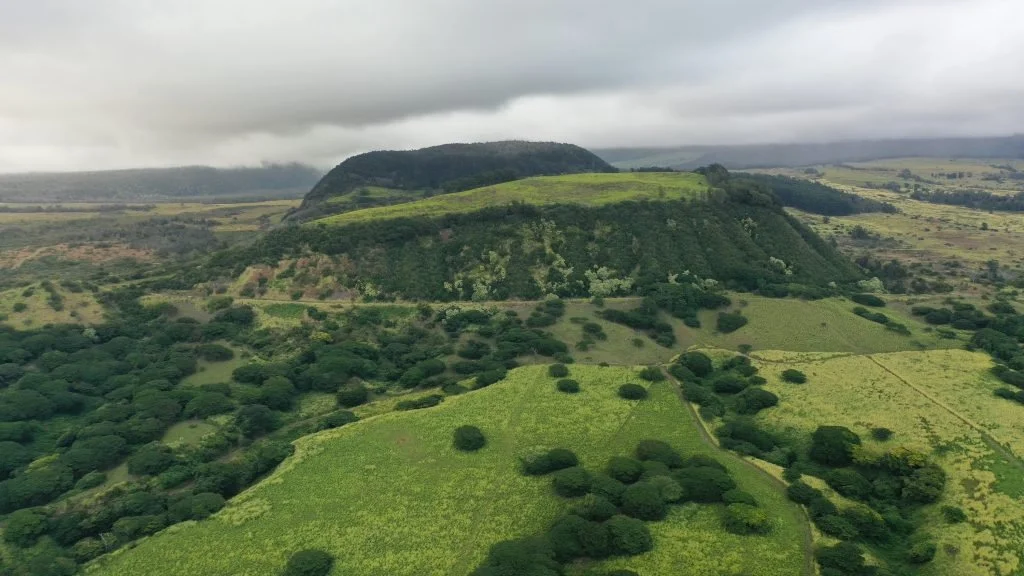
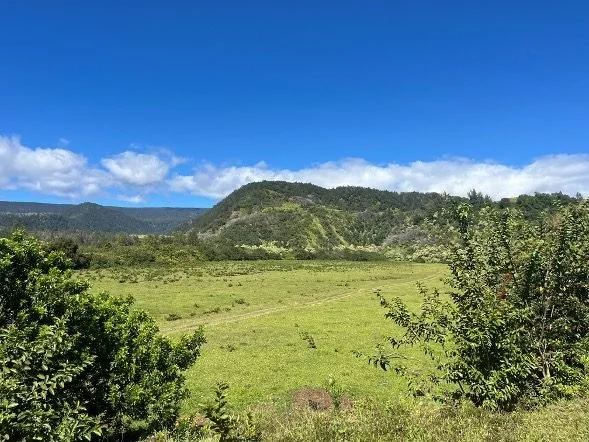
The Hīlea property contains several mountains, including Makanau and Pakua. Makanau is home to Kohāikalani Heiau, which is currently used for cultural practices and ceremonies, and there are 357 acres of native ʻōhiʻa and uluhe forest on Pakua. Situated mauka of Punaluʻu and Kāwā coastal areas, Hīlea supplies the fresh water springs and estuaries of both areas. Sections of Hīlea were formerly sugar cane. Today, the property is a potential site for forest restoration.
Edmund Olson Trust II, Hīlea’s primary landowner, is currently marketing the property. AG-zoned with 28 lots of record allowing for development without subdivision approval from the county, the property has also been recognized as a potential candidate for hydroelectric, solar, and wind energy production. At least two buyers have already shown interest in Hīlea – a ranching business and a developer.
Some sugar lands in Kaʻū have been converted to wind, hydroelectric, and solar developments, resulting in the death of native birds and bats, as documented by the American Bird Conservancy. Still others have been subdivided and sold as agricultural lots with detrimental consequences to the adjacent state and privately owned native forest biota, including the introductions of alien pest species. Through acquisition by TNC, Hīlea could be kept in its current use in agriculture and forest, mitigating the introduction of invasive insects, weeds, and pathogens.
A conservation nonprofit, TNC purchased four parcels of private forestlands adjoining the Kaʻū Forest Reserve in 2002. These parcels form the Kaiholena Preserve and are part of the Kaʻū Preserve, which TNC recognizes as one of the most intact native forest expanses in the state. The Hīlea property’s native forest is adjacent to the native forest of the Kaiholena unit and the State Kaʻū Forest Reserve.
Hīlea has three water sources and maintains significant rights to a water source on TNC’s upslope property. According to TNC, mismanagement of this water through withdrawal or diversion could adversely impact the 18 Endangered Species Act-listed species that call Hīlea home, and threaten surface and sub-surface stream flow in the seasonally arid lowlands.
In January, TNC applied for a Legacy Land Conservation grant from DLNR to help protect Hīlea by stewarding the land, including ranches, open space, cultural sites, and forest along the steep mountainsides. In addition, TNC requested another $2 million from the U.S. Fish and Wildlife Service Recovery Land Acquisition grant program. Although TNC has accepted the grant that DLNR offered, the funding may only be awarded at closing if TNC can gather the rest of the funding needed for the purchase of Hīlea.
In the meantime, TNC’s initial assessment of the area found the forest to be native-dominated, and the area to possess characteristics unique in this elevation, including resilience, biodiversity/native forest, and water flow. Prior to the grant application, TNC garnered support for its interest in Hīlea from members of the community, including three ranches with leases at Hīlea.
“My family, along with the Andrade and Johanson ranching families, have been leasing the agricultural lands on the Hīlea parcel for many years and have had a good working relationship with TNC. The grant from the Legacy Land Commission is the first step in a possible acquisition and stewardship of this beautiful wahi pana by TNC and Ka ʻOhana O Honuʻapo for the Kaʻū community.”
— Michelle M. Galimba, Councilmember, District Six, Hawaiʻi County Council
“This project is in complete alignment with the Kaʻū Community Development Plan, which highlights limiting development to existing townships and preventing things like habitat fragmentation which would happen if this rare, one-of-a-kind property gets listed on the open market and becomes 28 individual McMansions.”
— Megan Lamson Leatherman, Hawaiʻi Wildlife Fund Program Director and volunteer board member with Ka ʻOhana O Honuʻapo
“If TNC is able to acquire the property, it would be protected from development and maintained for its agricultural, cultural, natural open space, and watershed values in perpetuity. We would keep the agricultural lands in ranching, protect natural and cultural resources, and conserve the native forest, which is in line with what the Kaʻū community wants, as outlined in the Kaʻū Community Development Plan.”
— Shalan Crysdale, Director of TNC’s Hawaiʻi Island Terrestrial Program
Due to complexities related to the title investigation and TNC’s need to acquire funding for the full purchase price, the earliest estimated closing date is May 2027. Despite the lengthy process, this funding award is another step closer to a shared vision, built on the enduring dedication of the people of Kaʻū to protecting our community from development and preserving its precious native forests, fresh water sources, and coastlines.