Holomua Marine Edition Talk Story
Story & Photos By Jessica Andrews
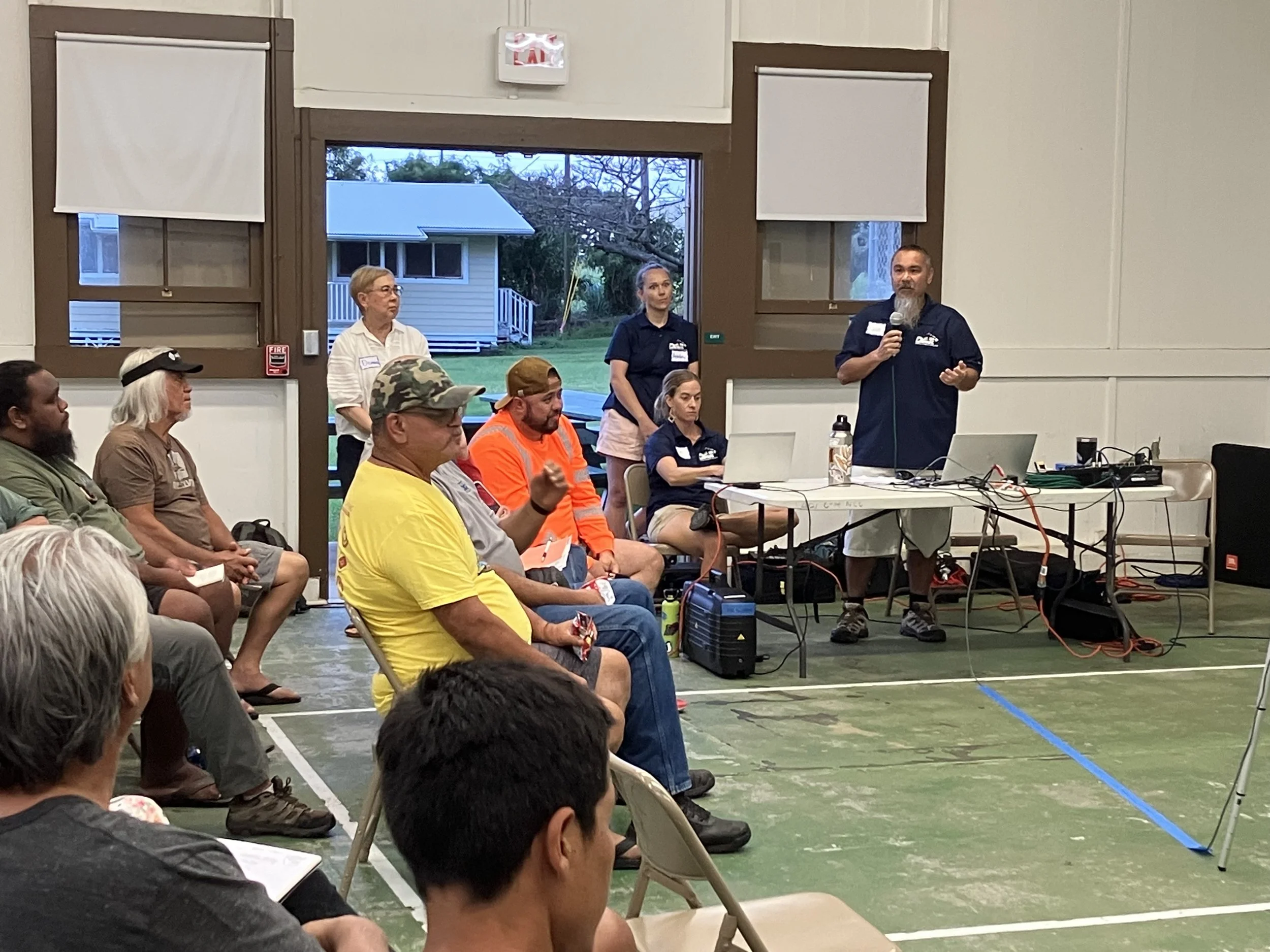
Kim Koch had tough questions for Department of Aquatic Resources (DAR) representatives introducing a proposed “bottom-up” management strategy for the near-shore environment.
Koch wasn’t the only Kaʻū resident skeptical about the Holomua Marine Initiative and what it would mean for her community. But she was one of the only attendees at a May 19 talk story session in Nāʻālehu to ask about the money driving the effort.
“Especially on Big Island, you have all of these NGOs that are partnered with DAR, and they’ve been pumping huge grants — and they have been for many years — into a lot of these communities and I think it sways the process,” Koch said. “When you have these NGOs and these nonprofits that have been funding hundreds and hundreds of thousands of dollars to the tune of $3 million a year getting pumped into the local communities to tell the fishermen and the people of the community that they need rules, I think the whole process is kind of corrupt.”
The development of the Holomua Marine Initiative on Hawaiʻi Island is still in its infancy, said Ryan Okano, a DAR biologist stationed in East Hawaiʻi. Building upon a successful rollout of the initiative on Maui, Okano and his team began the process on Hawaiʻi Island with seven talk story sessions in May.
The initiative isn’t about establishing fishing regulations, restricting shoreline access or creating marine management areas, Okano said. Rather than legislators and officials with the Department of Land and Natural Resources making the decisions, he said, DAR wants the people who know the most about the resources to drive the Holomua initiative.
Facilitating the talk story session on May 19 was Dr. Donna Ching, a representative from the Pacific Center for Collaboration, who is working with the Hawaiʻi Community Foundation. According to the foundation’s website, HCF will administer a “pooled field of interest fund” to support rolling out the initiative.
In addition to creating a management plan for near-shore aquatic resources, the Holomua Marine Initiative will provide grants, according to the HCF website. The HCF has a fundraising goal of $3 million for the initiative, the website states.
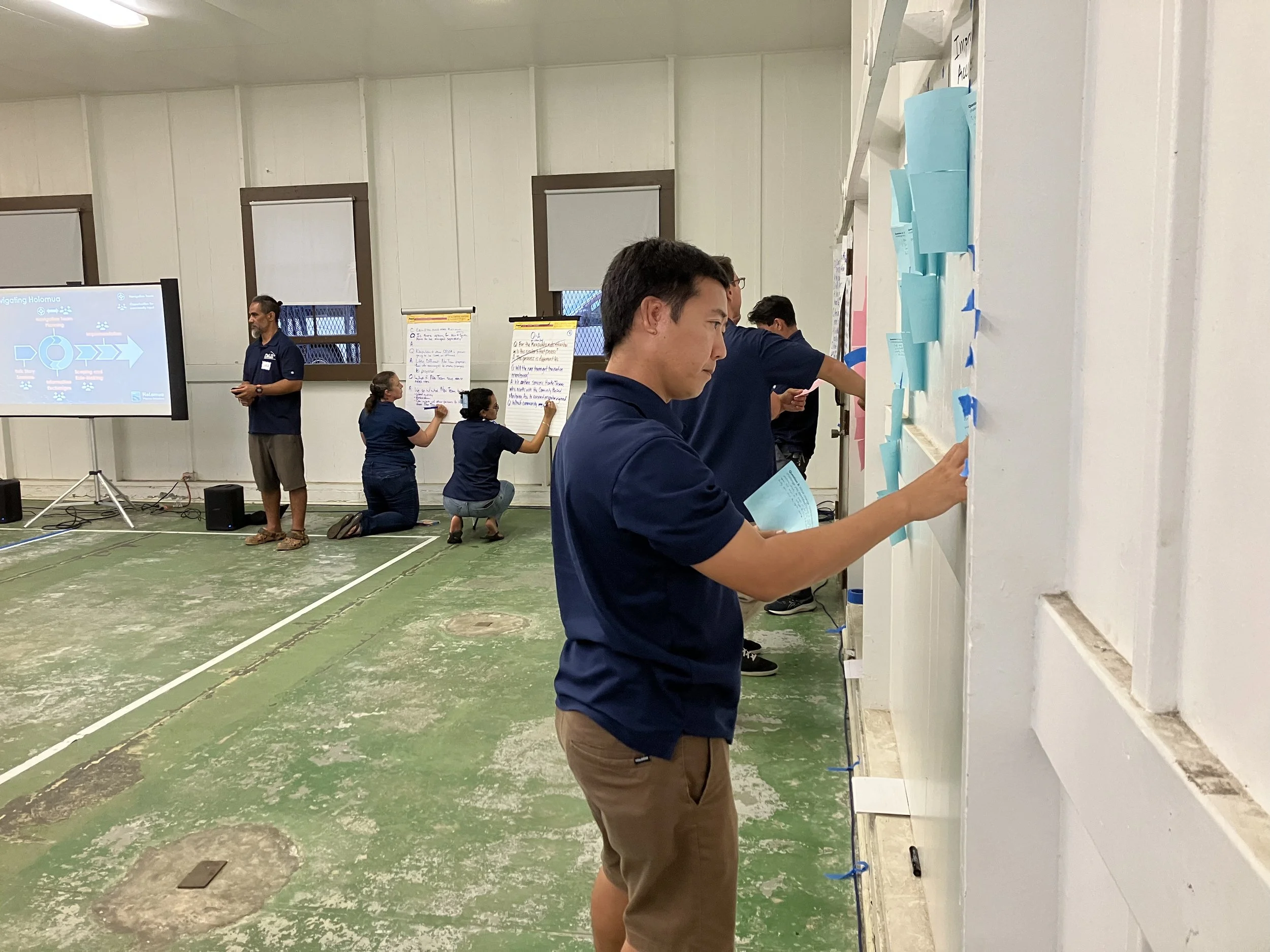
The first step in the Holomua process is gathering input from fishers, cultural practitioners and residents, and creating a Navigation Team that is tasked with developing the plan.
“They’re the ones who get together and make up a plan — a plan that we will help implement after,” Okano told Kaʻū residents. “The Nav Team’s kuleana is to reach out to the community and get input.”
Navigation Team members will be chosen via a seven-member nomination review team comprised of local residents, Okano said. The Navigation Team is expected to start working together in late summer or early fall. Members must commit to working 18 to 24 months putting the Holomua plan together, he said.
One question residents had was if Navigation Team members would be expected to work for free. Okano’s DAR colleague, Edward “Luna” Kekoa, who helped implement the initiative on Maui, said the agency had written a proposal to the Hawaiʻi Community Foundation asking for $1,000 stipends for Navigation Team members on the Valley Isle.
Another question residents had concerned how the Navigation Teams would be set up to represent all Hawaiʻi Island communities. DAR is thinking about addressing that by having each member of the group tasked with creating the Navigation Team come from each island district, with Kona getting two representatives.
“The thinking was there are a lot of things happening in Kona,” he said.
As for the number of Navigation Teams and how many members they’ll have, that is still up in the air, Okano said.
“For Maui it was 20,” he said. “And, for example, if it’s 20, we’re going to try and divide the people of the Nav Team based on their places. If the whole island was one Nav Team, there are six moku. Divided by 20, that means everybody should have three and some might have four.”
Dean Fukuchi, a Hilo resident who has attended all of the Holomua talk story sessions, including the one in Nāʻālehu, urged Kaʻū residents to push for having their own Navigation Team. A smaller Navigation Team is more effective, he said, because no one wants to speak for another community.
“If the Nav Team is supposed to be based on the community, then it should be a Nav Team for Kaʻū, or a Nav Team for Hilo, or a Nav Team for Miloliʻi,” he said. “Because then that way the center of expertise, the communities, are there closer and they can manage and make corrections to their implementation plans quicker.”
For more information about the initiative, visit dlnr.hawaii.gov/holomua