Ike Kūpuna Kaʻū: Paulette Ke
Photos and Interview By Laila Moiré-Selvage
Welcome to ʻIke Kūpuna Kaʻū, a new regular column dedicated to preserving the wisdom, memories and living history of our district’s elders. In a rapidly changing world, our kūpuna hold the foundational stories of this ʻāina. By sitting down with them, we hope to bridge generations and keep the spirit of historic Kaʻū alive for our keiki.
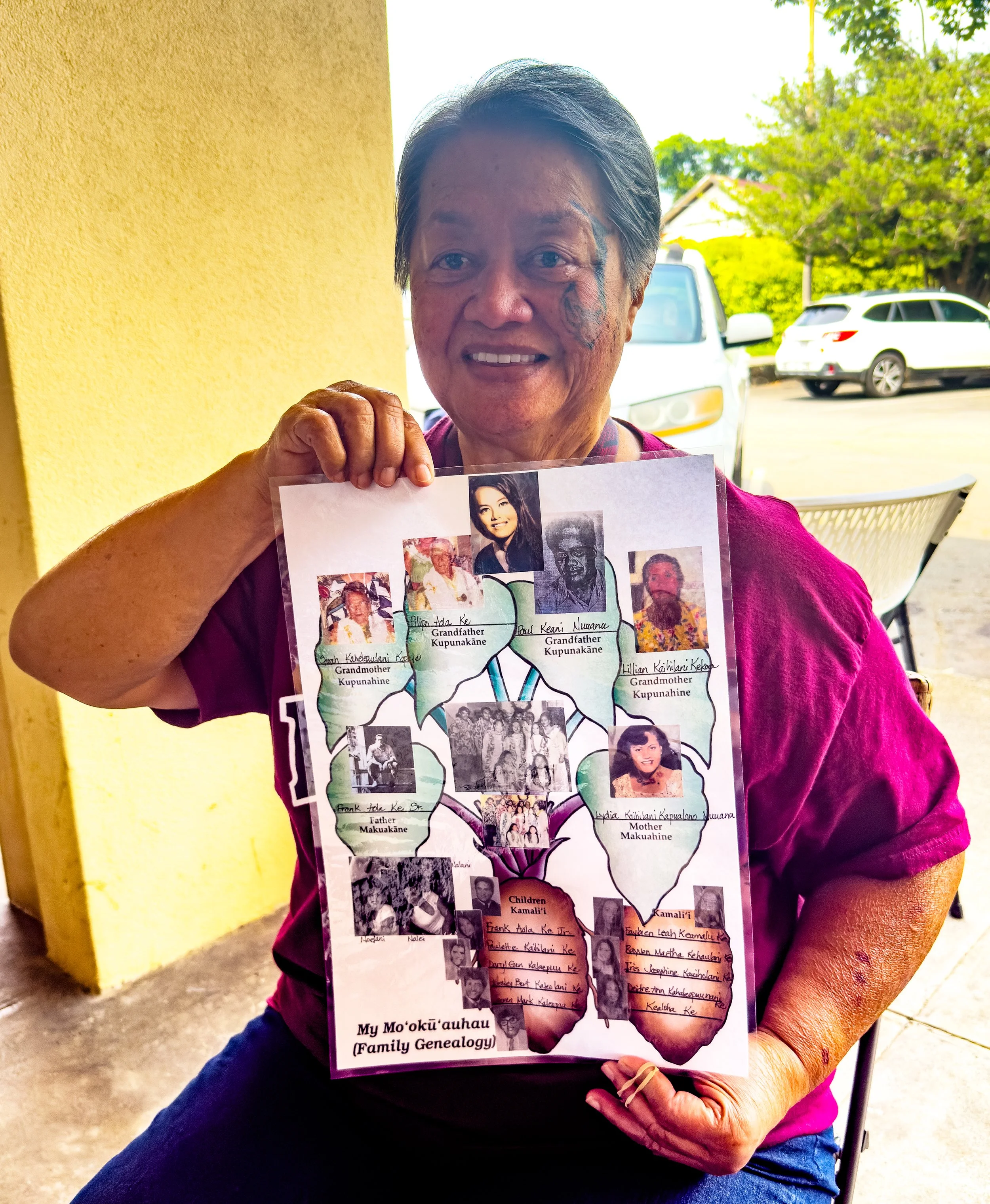
For our very first column, we sat down with Pāhala and Kapāpala Ranch native Paulette Ke (Hawaiian name: Kaihilani). Born in 1952, Paulette is the daughter of a paniolo, a retired educator and a mother of three daughters: Noelani, Nalei and Nalani. After 31 years living in Kansas, she returned home to the island in 2001. Here are her memories of growing up in Kaʻū.
What was this community like when you were growing up?
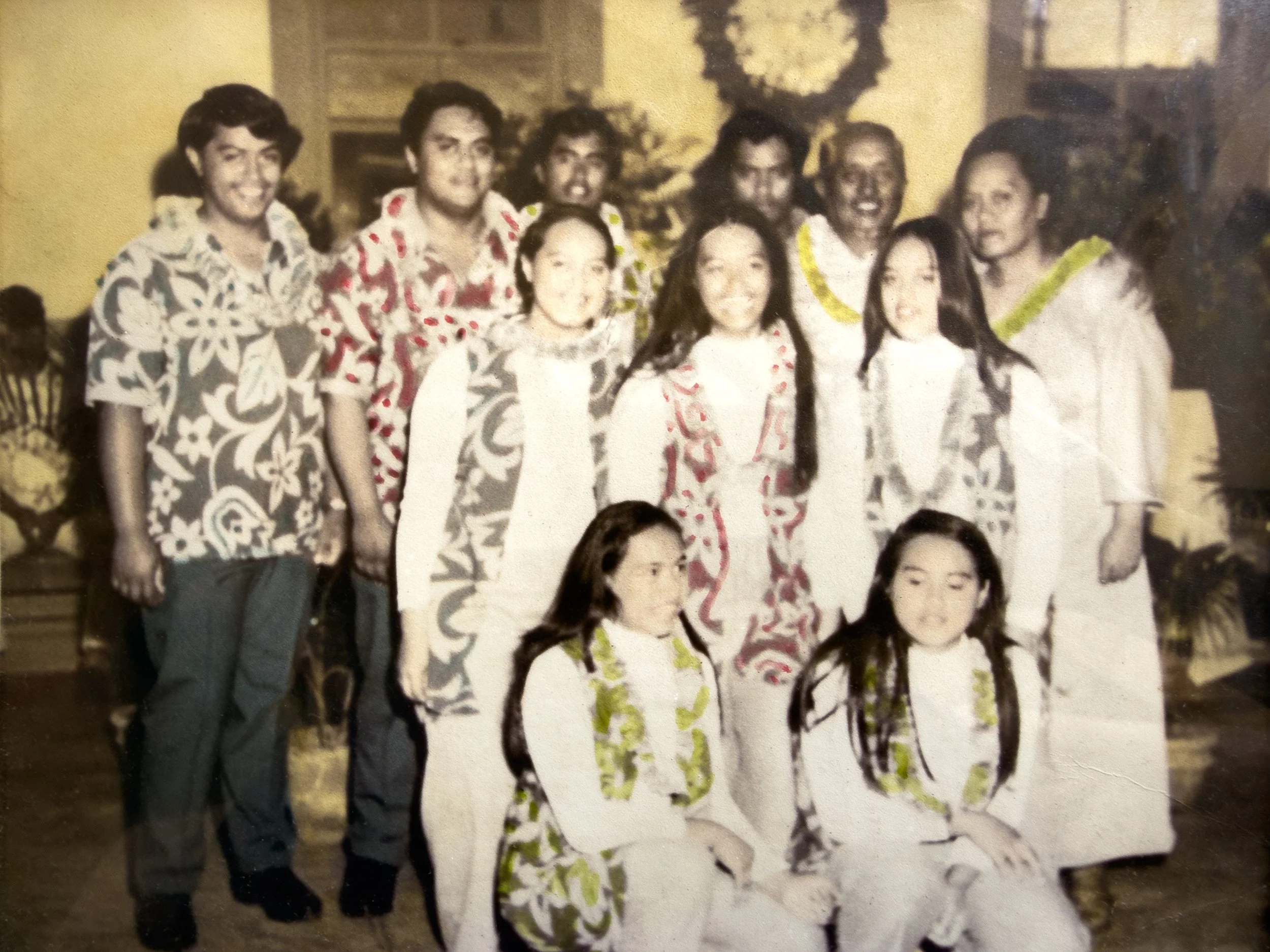
I grew up on Kapāpala Ranch. There were 10 of us kids in my family, and we had ranch families all around. We all knew each other. Nobody had money, so we all made up our own games. We played cowboys and indians on the fallen trees in the woods.
The color of the buildings way back when I was growing up — they were red with yellow trimmings. The ranch buildings were all dark forest green and the manager’s house has always been white.
If you ever get to go to Kapāpala Ranch, drink the water. It has this natural, sweetened taste like none other. The lava rocks way down below are like a filtering source, cleaning the spring water. It’s the best.
We were also the first ones to have a TV up in Kapāpala when I was 13. It was a 13-inch black-and-white. Nobody else had it, so everybody at the ranch would finish school, yard work, feed the animals, take a bath and bring their dinner down. We’d put a big mat in the front yard and the TV facing out. We’d turn the volume up all the way and the whole ranch would watch TV together. It was a sit-in theater instead of a drive-in!
What do you remember about leaving Hawaiʻi for the first time?
When I graduated and left for college in 1970, I packed a cooler filled with frozen seafood and Hawaiian food, laulau and kālua pig for the family in Los Angeles that I was staying with.
When I got to Los Angeles, my family there asked if I could stay an extra two or three days to help. They took me down to a United Airlines hangar where my cousins worked. There were no airplanes inside, only cars and trucks, and this huge stage with all these chairs around it. It turned out to be a big lūʻau for a group of local Hawaiians called the “Sons of Hawaiʻi.” It was a kāne group with 900 men in this club.
They brought me down there and asked, “Can you teach the hula?” My cousin sang and I taught the hula and danced on that stage for several hours while they put up the sound system. We danced to “Blue Darling,” which was the most popular song in the late 1960s and 1970s. All that money they fundraised was a scholarship to help local children there go to college.
How did a ranch girl from Kaʻū end up in Kansas?
When I graduated high school, I just wanted to stay home and work because I couldn’t ask my dad to borrow money for college when we had so many mouths to feed. But my school counselors made me apply to three places. I went down a list of degrees for agriculture, and Friends University in Wichita, Kansas, popped up under “K” like my last name. My dad was a paniolo, and I wanted a degree so I could tell my dad I’m a certified cowboy!
We were in the first few weeks of class, and the professor looked at me and said, “Honey, I’m so sorry, but we don’t have a degree in cowboy.” The whole class thought it was so funny and laughed, but I wanted to cry. I stuck with it and got a degree in agribusiness with a minor in horticulture. I got scholarships and grants for school, especially from the Queen Liliʻuokalani Trust Foundation, which took me all the way to the end.
Later on, I went back to college at Kansas Newman and got a second degree as an addiction counselor with a minor in sociology and then worked on my master’s in social work. I stayed in Kansas until my daughters were all 18 and graduated. In 2001, I finally moved home. I got my Hawaiʻi teacher’s certification and taught adjudicated children for the state. Now I’m retired, but I currently work with the Foster Grandparent Program at The Volcano School of Arts & Sciences. My mom wanted to become a teacher. Vicariously, two of my daughters and I became educators.
What is your fondest memory of living in Kaʻū?
The summer before I left for college, my dad came home and told me, “I already got you a job.” He sent me to work at the Nāʻālehu Dairy, which was one of the biggest dairies in Hawaiʻi. We milked around 500 head twice a day.
I worked tending to the baby calves with a retired cowboy named Charlie Akiu. Charlie always wore jeans with suspenders or overalls, a lauhala hat and a lit cigarette that never left his mouth. He could talk, spit and work, and that cigarette was still right there!
At the dairy, I couldn’t even milk the cows for the first several weeks. I just had to sit there because the cattle had to get used to me. They wouldn’t let down their milk if I touched them until they were used to me. While working there, I saw that my two younger sisters at home didn’t have a purpose and were just picking on each other. I asked Charlie if I could buy two calves to give them a job. We chose a Holstein for one sister and a baby Hereford for the other. They both loved raising them, and that sister with the Hereford ended up growing up to raise some of the best cattle here at home. It gave them a purpose.
Why is it important to keep Hawaiian traditions and protocols active in the community today?
I am 100% full Hawaiian, and there are not very many of us left. I miss hearing my tūtū guys talk story. The culture was suppressed for a long time, but I never stopped loving it. My mom was a great teacher.
Now, we inspire each other to keep things alive. My daughter Nalei teaches at the Nāwahī Hawaiian Immersion School. My family and I were at the Kaʻū Kalo Festival to start the festival and do Protocol.
Is there anything from the past that you miss or would like to see return?
There are a lot more people now, but before, when you listened, you could hear the birds. Now I notice a lot of anger. People don’t know how to apologize. I wish we would bring back more hoʻoponopono, where whatever is said there is supposed to stay there and you give it up to the heavens and just let it go. When my mom was upset, she would always walk away before she would say anything. She told me: “Once it leaves your mouth, you can apologize all you want to, but they already heard what you said. You can never take it back, so be careful.” I try to choose my words carefully.
What are your hopes for the future of this community?
To educate the keiki and to mālama the ʻāina. We are far away in this district, but don’t let our district stop you from going beyond to get an education. Learn everything you can, and then bring that wisdom back to take care of home.