
Lāʻau Letters: Native Plants of Kaʻū (Kūkaenēnē)
By Jodie Rosam
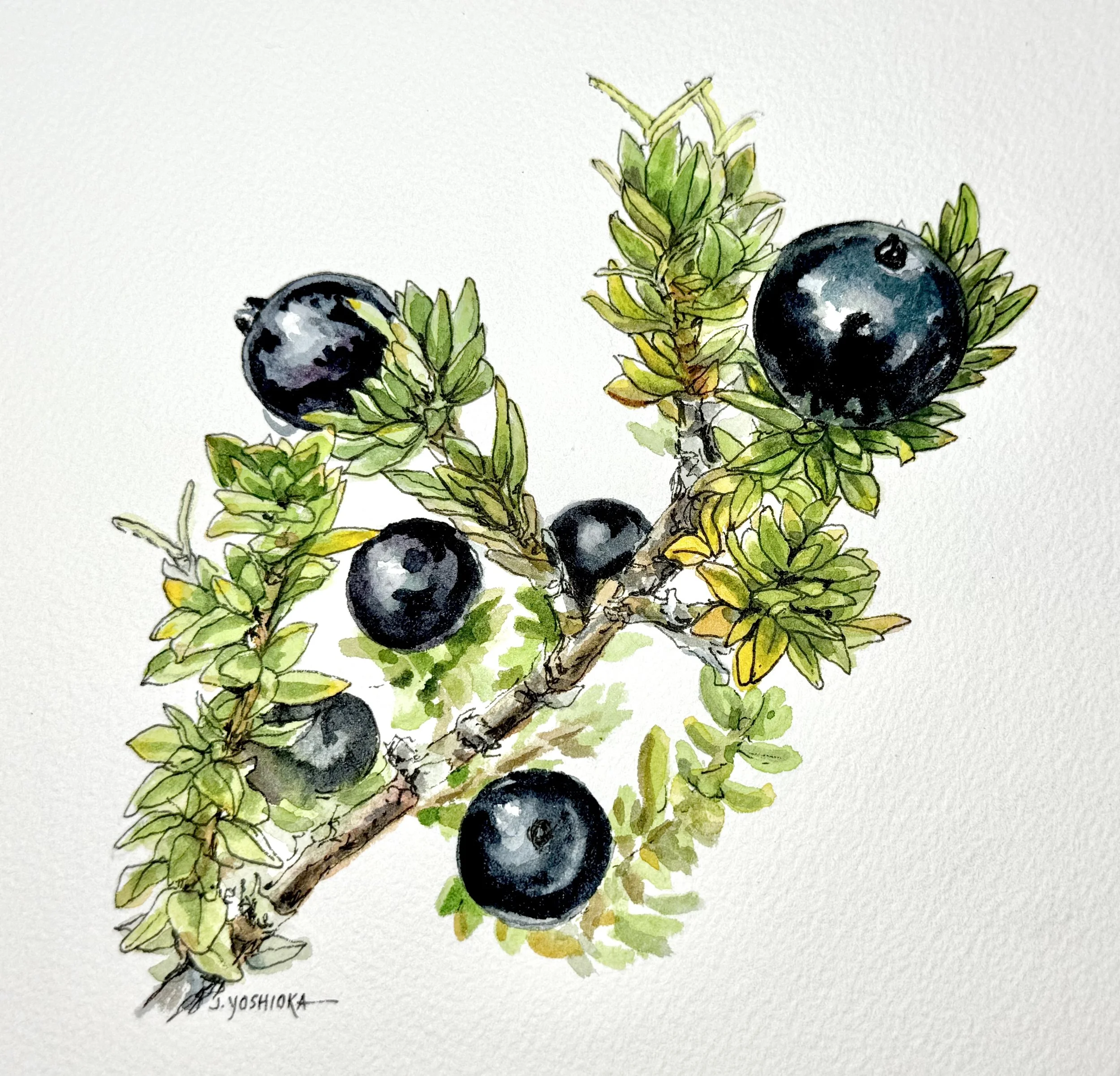
Artwork by Joan Yoshioka
Aloha to all of the plant lovers of Kaʻū – we are back and so grateful for the opportunity to continue to share about all of the amazing native plants of Kaʻū. If you are a new reader, welcome to Lāʻau Letters: Native Plants of Kaʻū. Each month you can read about Kaʻū’s native plants and their moʻolelo (stories), uses, preferred habitats, opportunities to adopt them for stewardship, and other fun tidbits. This column really is a place for you to connect with new plants you may not know or to reignite your relationship with ones you already do. Because let’s face it – we need them more than they need us! To those who have read this column before (and thank you for doing so!), expect a slightly different structure than you are used to, but hopefully this will still be a helpful resource to you. Hawaiʻi is home to so many endemic (only found here) and endangered and truly unique plant species. Not only do they perform ecological and ecosystem services, but they connect us to who we are and where we came from. I encourage you to not only read and research about the plants that interest you (hopefully all of them), but to also seek them out (if possible, safely and legally) - smell them, touch them, observe them, listen to them. Dive deep into what they represent to you and form the relationship that keeps us thriving. And please use a Hawaiian dictionary or wehewehe.org to dissect the names to really uncover all of the connections these plants have to the universe, including all of us. Enjoy!
Kūkaenēnē (Coprosma ernodeoides)
About: I hope you spent July looking down in the forest and met ʻAlaʻalawainui. Stretch your necks and get ready to do it again in a slightly different habitat, because I want to introduce you to another low-lying friend that you will quickly learn to love. Meet Kūkaenēnē, an endemic herbaceous shrub in the Rubiaceae (or coffee) family. Kūkaenēnē is a cousin to Pilo and Kōpiko (and 11 other endemic Coprosma), but this one is unique in that it is the only endemic species in the genus that has black fruits (the rest tend to have red and orange). Kūkaenēnē is found on both Maui and Hawaiʻi Island, typically in about the 4,000 to 8,000 foot elevational band. Unlike ʻAlaʻalawainui who tends to grow in the forest, Kūkaenēnē likes to grow in more open sites, often on lava flow edges, cinder fields, or subalpine woodlands (but are happy growing in a variety of other elevations and habitat types, too). This plant creeps and crawls across lava flow substrates, sometimes becoming a dense mat and other times shooting out fingers that remind me of heʻe tentacles reaching out for the perfect perch.
The leaves are bright green and triangular and completely cover the thick, woody stems. As beautiful as this plant is, my favorite part of Kūkaenēnē is hands-down the flowers, which are male or female depending on the individual. Both are off-white in color, but male plants produce staminate flowers (which means they lack female parts and only produce pollen) with four lobes, while the female plants produce pistillate flowers (lacking male parts) with long (up to 1 inch), brush-like, stigmas that reach up to the sky. These cute, fuzzy stigmas are abundant this time of year, and will soon yield to many shiny, deep-black fruits, which this plant is named for.
Etymology is such an interesting topic to learn, and when learning the etymology of Hawaiian plants, we get the chance to look at it from the lenses of three (and often times four) different languages: ʻŌlelo Hawaiʻi, Latin and/or Greek, and English. The genus name is derived from the Greek work kopros, which refers to the smell given off when the leaves of some species are crushed - more specifically, referring to the rotten cabbage or dung-like smell of methanethiol. Similarly, the Hawaiian name Kūkaenēnē can literally be translated into “nēnē dung”. Yes, I have crushed and smelled them, and no, they do not smell like Nēnē poop. But they do look like it! And if you think about it, Nēnē eat these juicy black fruits, and kūkae them! Additionally, many Hawaiian plants have more than one Hawaiian name, depending on who you ask, which island you are on, etc. Another name for Kūkaenēnē is ʻAiakanēnē, which can be translated into “food of the Nēnē.” Other names include Hupilo, Leponēnē, and Pūnēnē…go wehewehe.org those!
Uses: I already shared one extremely important use of Kūkaenēnē: it is food for an endemic (and also endangered) bird that is an important part of the ecosystem. It is important to remember that plants may have uses that benefit humans, but it is good to remove humans from the equation from time to time and recognize how important these species are for the survival of other species. As a primary colonizer of open lava flows, Kūkaenēnē builds soils and creates microhabitats for other species. But yes, there are some other uses of this species. The fruits make a really beautiful, deep-purple to black dye, and I have been told that a yellow dye can also be made from the inner bark of the stems, though I have not tried. The fruits and leaves can also be strung together to make lei.
Growing: Kūkaenēnē can actually tolerate a variety of growing conditions, so do not feel like you need to be in a subalpine woodland to have success keeping Kūkaenēnē in your space. Fruits are easy to come by, so pop a few of those black pearls off of the plant and bring them home. You can remove the pulp in a bowl of water (and strain out the pulp if you want to use the water as dye!) to expose the seeds. The seeds have a hard outer shell that needs to be scarified to allow water to penetrate through the seed coat. While there are many ways to do this, I prefer using the corner of small nail clippers to nick the seed coat. The media needs to be well-drained, and I would recommend something sandy to mimic cinder conditions in the field. Keep your tray warm and moist, and you should see germination in several weeks. When ready, plant your Kūkaenēnē somewhere that gets mostly full sun and where it has room to reach its tentacles out and sprawl. Good luck, and as always, if you have any questions, feel free to ask me!
jodie.rosam@gmail.com
About the artist: Joan Yoshioka is a conservationist at heart and has dedicated her life to preserving the native plants and animals of Hawaiʻi through her work with various federal, state, and private organizations over the past 30+ years. She describes herself as an outdoor-lovin' optimist, biologist/botanist, and habitual creator of art-stuff. She believes the key to our most fundamental and truest part of ourselves is found in nature and she constantly draws on it for inspiration.
About the author: Jodie Rosam has a deep love for native plants and a passion for exploration, with over 20 years of experience stewarding Hawaiʻi’s forests. She works for The Nature Conservancy and with Hawaiʻi Wildlife Fund, and serves on many non-profit boards. Jodie wears her love for Hawaiʻi’s native plants on her sleeve, and thrives on sparking a love for nature in her children, making new friends in the plant kingdom, and sharing her passion with others. When she is not in the forest, you can find Jodie rooting for her boys at baseball or keeping their fishing pole hooks baited! Feel free to send questions to her email: jodie.rosam@gmail.com.
