Sweet! A History of Honeybees in Kaʻū
By Alison Yahna
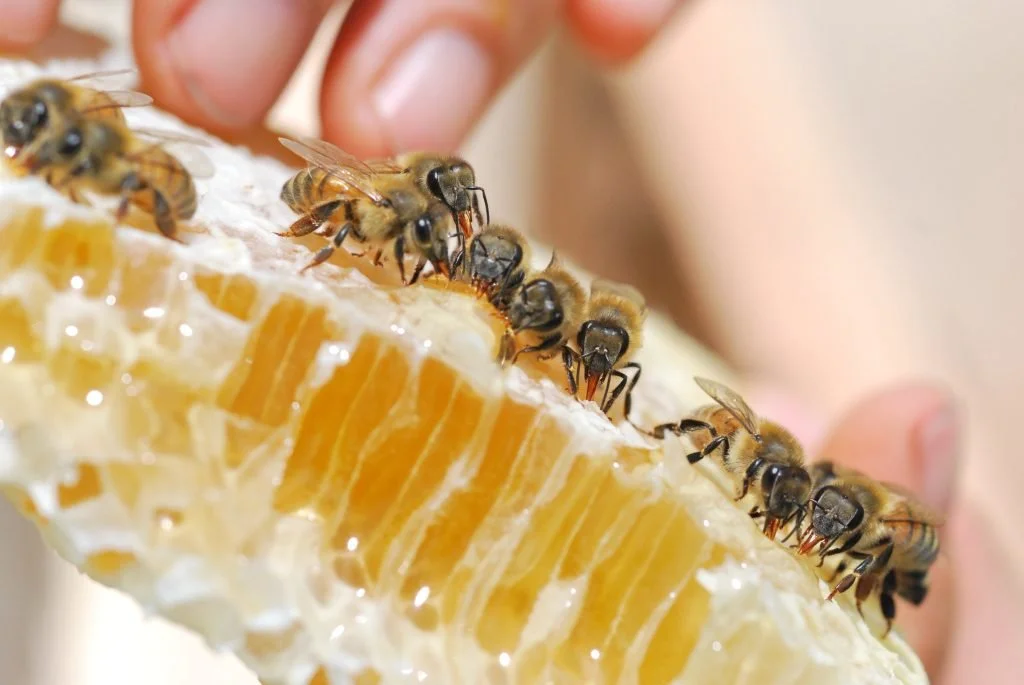
Honeybees are not native to Hawaiʻi, but nalo meli, the “honey fly,” was warmly welcomed and protected upon arrival. The first two honeybee colonies to arrive were purchased in 1853 by Charles Bishop and Bernice Pauahi Bishop for $13. These colonies, weakened by the long journey around Cape Horn, did not live long. In 1857, three colonies of German Black Bees arrived from California in good shape, and were purchased by the Royal Hawaiian Agricultural Society for $100 each, equivalent to over $11,000 today! Those three colonies prospered in the Nuʻuanu Valley under the care of Dr. William Hillebrand and soon increased to nine.
For the next few decades, Honeybees swarmed and established themselves throughout the Hawaiian islands, living and reproducing freely as wild bees. Few colonies were kept and managed by beekeepers until the turn of the century, when entrepreneurs in the sugar and cattle industries saw the potential to make a fortune. To protect the budding honey industry from the introduction of bee diseases and pests, a ban on the import of honeybees was established in 1909. Commercial operations began large-scale honey exports in the early 1900s, with hundreds of thousands of pounds of honey exported annually, mostly to Europe. A single ranch on Molokai became the largest producer of honey in the world. In 1918, it exported over 500,000 pounds of fine kiawe honey. Kiawe, mesquite, which was introduced to provide cattle fodder, also produces a high-quality honey crop.
Despite the ban on live honeybee import, which still exists today, the honey industry declined sharply in the late 1930s due to a disease called American foulbrood, the Great Depression, and the introduction of the sugarcane leaf hopper, which eliminated aphid honeydew as a “nectar” source for the bees. By the early seventies, several honey companies had re-emerged on Hawai'i Island, and a new, even more lucrative industry, artificial queen-bee production, began operations in Kona.
The Fierce Black Bees of Kaʻū
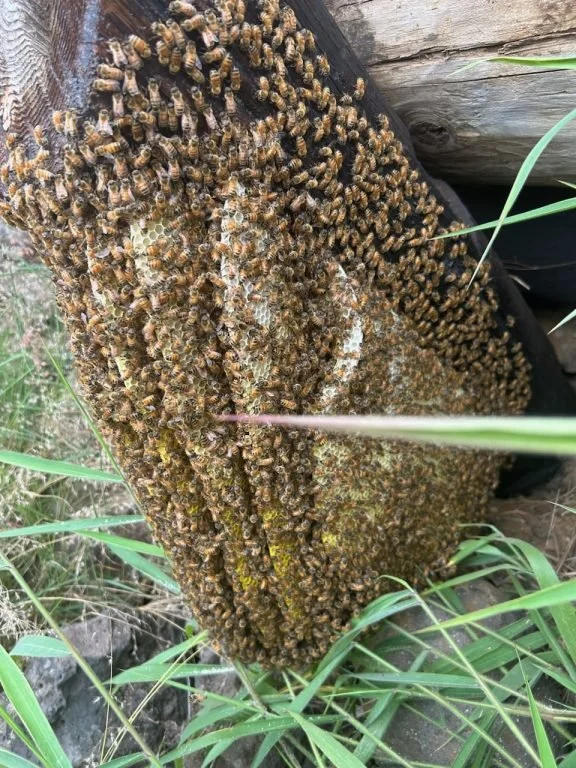
The district of Kaʻū, largely left alone by the commercial honey and queen bee industry operating elsewhere on the island, was populated by fierce descendants of the German black bees. They established themselves in hollow trees, lava tubes, cliffs, and even homes. These wild bees had adapted for 150 years to the rugged lowlands and lush mauka forests of Kaʻū, and are thought to have become resistant to American Foulbrood. Wild colonies were abundant from the tip of Ka Lae to the upper flanks of Mauna Loa. While commercial operations favored docile, selectively bred bees that were easier to handle, the fierce black bees of Kaʻū continued to live as wild colonies, protected by their aggressive reputation. As a result, Kaʻū became a repository for wild honeybee genetics, which has proved to be important to their survival.
Honeybees — A Super-Evolved Superorganism
Would it surprise you to learn that honeybees demonstrate a higher level of biological evolution and intelligence than humans? Honeybees are a superorganism; a hive is a single being made up of tens of thousands of individuals. Fossil evidence suggests that honeybees moved from ‘organism’ to ‘superorganism’ about 100 million years ago. Humans are still in the organism stage of evolution, and have been around just a fraction of that time.
A single hive has up to 60,000 sterile female ‘workers,’ a smaller number of male bees called drones who develop from unfertilized eggs, and a single queen who is the mother of them all. In addition to serving as the “ovary” of the superorganism, the queen also provides a powerful pheromone called “queen substance,” which holds all the bees together. Just like individual cells in an organism, individual bees work together to carry out the life processes of the hive and cannot survive for long outside it.
Statements such as “she’s the queen-bee” reveal more about royal privilege and behavior in humans than bees, because the queen bee is much more of a servant than a boss. After a single mating flight, the week-old queen will return to the hive and begin to lay eggs in the wax combs of her brood chamber, the womb of the hive where the babies are fed and cared for by the worker nurse bees. Like butterflies, bee larvae go through metamorphosis and hatch out of their honeycomb cell as adult bees. Raised and fed on royal jelly, a queen can eat her weight in this magical food produced by young workers and lay her weight in eggs – up to 2,000 of them in a single day! While workers and drones live only six to eight weeks, a queen may live six years or more.
For most of their short lives, worker bees remain inside the hive, performing many tasks in sequence as they age. As young bees, they feed the queen and raise the baby bees from stores of pollen and nectar. Other jobs include wax production and comb-making, cleaning and sterilizing the interior of the hive with propolis, protecting the hive entrance as guard bees, ventilating and helping dehydrate nectar into honey by fanning their wings, and the many other tasks needed to keep the superorganism alive. We most likely see and hear bees during the last stage of their life, when they are collecting nectar and pollen as foragers. These are honeybee elders, who will live their last days flying hundreds of miles and visiting thousands of flowers to collect food for the hive.
Everybody loves honey, but bees do something much more important for the earth; they pollinate plants. As they burrow into flowers to collect nectar, their furry bodies are dusted with pollen. They transfer these pollen grains from flower to flower, allowing plants to reproduce sexually and produce seeds. The co-evolution of bees and flowers millions of years ago gave flowering plants the advantage of genetic diversity, leading them to dominate the plant kingdom. For humans too, the pollination of flowers by bees is an invaluable partnership. Two out of every three bites of food we eat are directly or indirectly dependent on pollinating insects. Some important crops pollinated by honeybees in Hawai'i are coffee, macadamia nuts, avocados, citrus, lychee and many other fruit trees.
Apitherapy – Bee Medicine
Besides the critically important jobs of pollination and providing us with delicious and healthy honey, what else are honey bees good for? According to ancient Egyptian medical texts, every product of the hive has been used as medicine for at least four thousand years!
The use of bee products as medicine is called apitherapy, and includes the following:
Royal Jelly: a rare substance produced by the colony to raise and feed their queen, is a valuable product of the hive, taken for energy, anti-aging, and fertility.
Propolis: The “defender of the city” is an antimicrobial substance gathered from saps and juices of plants and used to sterilize the inside of the hive. It is commonly used in salves and tinctures to treat wounds, sore throats, and boost the immune system.
Bee Bread: Pollen that has been collected and fermented in the honeycombs is a powerful superfood containing every vitamin and mineral needed by humans.
Honey: The most well-known bee medicine; the FDA has recommended raw honey instead of over-the-counter cough and cold medicines. It is more effective and has no side effects. Honey is effective in treating MRSA, burns, and bedsores when applied topically.
Venom: The author has treated herself and others for many health issues using the venomous sting of the worker bee. Those suffering from Lyme disease have found it an effective cure. *Beeswax: commonly used in salves and lotions, while beeswax candles produce negative ions and purify the air.
Respiratory/Vibrational Therapy: Breathing the air of a hive and lying on top of hives has been used in Eastern Europe to heal respiratory disease and treat conditions from PTSD to autoimmune diseases.
A whole article could be written about each of these amazing gifts from the bees. The author has a library shelf of books about Bee Venom Therapy alone.
Why Are the Bees Dying?
While bees provide us humans with both food and medicine, we have not been equally benevolent in our partnership with them. Most people have heard that honeybees are in crisis - from ‘Colony Collapse Disorder' twenty years ago, up to this past winter's massive loss of 1.1 million colonies in North America, which will contribute to crop loss and higher food prices in 2025. Some version of “What’s wrong with the bees?” is probably the question I have been asked most often in my 25 years as a beekeeper. As sad as it is, the answer has everything to do with how we humans are practicing industrial agriculture. Far from the idyllic vision of the beekeeper collecting honey from his beloved hives at the edge of the forest, the vast majority of honeybees have fallen into the soulless realm of commercial factory-farming. Our modern conventional methods and large-scale industrial beekeeping practices create health problems for honeybees. They can also generate imbalances in local ecosystems, harming Hawai'i's native pollinators and rare nectar-feeding birds like the ʻapapane and ʻamakihi.
Until recently, Hawai'i Island had almost a million wild honeybee colonies and thousands of commercial hives. Hawai'i was free of many of the diseases and parasites that were problems for colonies elsewhere in the world, particularly the destructive Varroa mite. The mites feed like ticks on the bees and their larval babies, but also transmit deadly viruses to the colony. Although Hawai'i didn’t yet have Varroa mites, commercial queen producers noticed in 2006 that the bees had a mysterious illness. They were ‘absconding’, abandoning mating nucs, and previously healthy colonies were collapsing.
Nevertheless, queen-producers on the island finished out the season, shipping almost half a million queens to North America to supply the migratory beekeeping operations our agricultural crops depend on. By 2007, North American beekeepers were sounding the alarm; their hives were dying by the millions from a mysterious condition. The condition, named Colony Collapse Disorder, was eventually traced to a novel gut pathogen called nosema ceranae. Whether or not this pathogen was introduced into Hawai'i through the artificial insemination of ‘breeder queens’ with imported drone semen, or through some other accidental means, the disease was exported with the queens to North America, contributing to the catastrophic decline.
The following year, 2008, disaster struck Hawai'i’s bees. Originating in a shipment of Honeybee queens from New Zealand, headed to North America via Honolulu, the Varroa Mite was introduced to Hawai'i. The mite spread rapidly through wild and commercial colonies, carrying its devastating viruses and killing hives. Beekeepers scrambled to learn how to identify symptoms and experimented with various treatments for their colonies. Commercial operators and conventional beekeepers around the Island began to treat their bees with several chemical and ‘natural’ miticides in an effort to save their hives. Just two years later, possibly in exported honey barrels that were returned to Hawai'i without being cleaned, yet another Honeybee pest, the Small Hive Beetle (SHB), arrived in Hilo. This beetle is native to Southern Africa, where it is an opportunistic predator — killing, feeding, and reproducing in the ‘carcasses’ of sick or weak honeybee colonies and, thanks to Varroa, Hawai'i was full of those.
Like its predecessors, the arrival of SHB in Hawai'i highlights the dangers of the global traffic in bees and bee products, which can quickly and easily cause both local collapse and global die-off of honeybee colonies critical to the human food supply. Within a few weeks of their arrival, small hive beetles began to kill and eat their way across the Big Island, reproducing like flies in the dead colonies and creating a massive population wave of beetles that overwhelmed even healthy commercial and wild colonies. This initial wave of SHB led to the death of more than 60% of managed colonies and the loss of 99% of Hawai'i’s once-abundant wild honeybees within two years.
Kaʻū Bees Resilient
Starting with CCD in 2007, the importance of Honeybees and concern over their survival began to enter public consciousness, creating a renaissance in small-scale, hobby, and backyard beekeeping. At the same time, local beekeepers began to diverge in philosophy between ‘natural/regenerative’ beekeeping practices and those of commercial/conventional operations. Kaʻū was home to several small-scale honey producers who worked with respect for the innate wisdom of the local ‘wild’ bees. Kaʻū bees displayed many of the survival traits that selectively bred commercial bees had lost. By 2017, supported by regenerative practices, they had gone through natural selection and began to show resistance to both mites and beetles. Unlike most commercial honeybee colonies, which remain dependent on continuous expensive and often ineffective applications of miticides and beetle ‘treatments’, these descendents of the wild bees of Kaʻū are now treatment-free, and beginning to repopulate their former wild habitats.
Since 2018, however, there has been a significant incursion into Kaʻū by large commercial companies from other districts, as evidenced by the numerous flatbed trucks stacked high with bee-boxes seen daily on the highway. As more bees are dying, the demand for exported queens has grown, as well as the profit to be made from them. Most recently, Kona Queen, once the largest producer in the world, as well as several other queen operations, have been purchased by a single corporation, US Honeybee. They have expanded their operations- ‘yards’ with thousands of mating nucs and support hives - into Kaʻū and other districts of the Big Island.
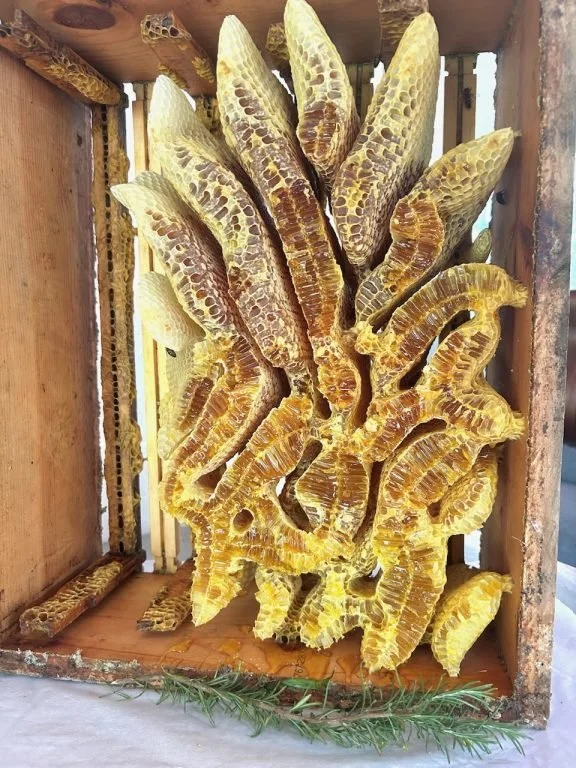
At the same time, there has been growth in small-scale natural and regenerative beekeepers, whose primary goals are to support the long-term health and vitality of our local Hawaiian honeybees, rather than pure economic profit. Regenerative practices includes the use of alternative hive-bodies that are more natural than conventional boxes for the bees, removing plastic ‘frames’ and other unnatural materials from the hives, letting the bees design and build their own natural combs to store honey and raise their babies, allowing bees to swarm and supporting their natural reproductive process which allows the healthiest strongest bees to survive and adapt resistance to novel disease and pests.
Regenerative beekeepers keep smaller numbers of colonies, avoiding overcrowding and staying in balance with the surrounding environment. They also do not ‘migrate’ or move their colonies from place to place, and of course, try to avoid keeping bees in places where they are exposed to deadly pesticides and herbicides. The biggest challenges our regenerative keepers and their bees face now are the large-scale use of agricultural and household herbicides/pesticides and the loss of survivor genetics through contamination by commercially produced bees.
How Can I Help the Bees?
Several natural and regenerative beekeepers in Kaʻū and our growing island community now offer training, supplies, and mentorship for new beekeepers. But you don't need to be a beekeeper to help. There are many ways you can contribute to the health and conservation of honeybees, as well as our rare native bees and other pollinators.
Refrain from using household and agricultural pesticides and herbicides, and choose natural and organic alternatives.
Conserve undisturbed lands, native ecosystems, and habitat. For example, clear only the portion of your property needed for any buildings or access.
Landscape with native, pollinator-friendly trees and plants, and provide nesting habitat (leaf litter, hollow trees, etc) for native bees and other pollinators.
Many people are drawn to support regenerative beekeepers because of the discernible quality and purity of the honey and other bee products they produce, and people feel good knowing they are truly helping the bees. Buy your honey from treatment-free beekeepers at local markets, and support local farmers and ranchers who are using organic or regenerative practices.
Plant trees, flowering shrubs, and ground cover (especially natives), and create water sources for wildlife.
Volunteer for community mālama ‘āina projects, such as restoring native forest.
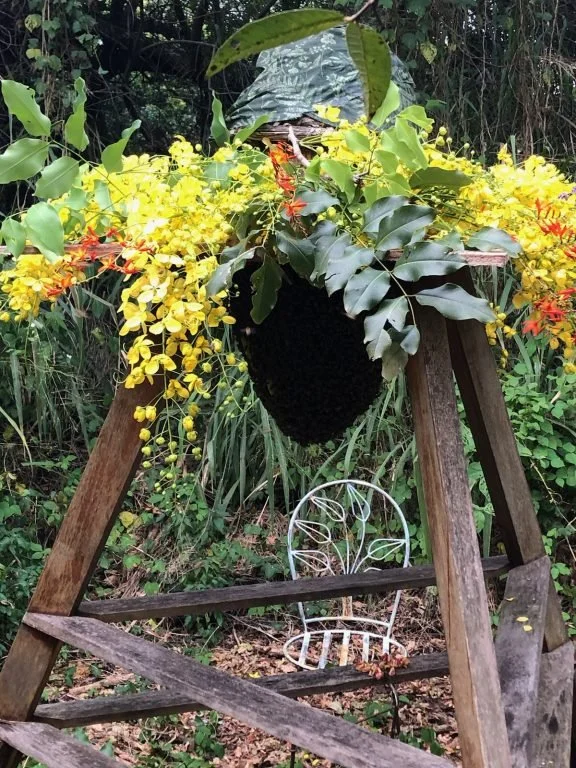
Call a local beekeeper to collect a swarm or remove a nuisance colony, rather than poison or kill it.
Love the bees, the Earth, and each other!
All major threats to honeybees ultimately come from their relationship with modern humans and the current unbalanced relationship humans have with nature. By dying, the bees are telling us that they are opting out of a “toxic relationship.” If we need to “save” them, it can only be from ourselves! The actions humans can take to improve honeybee survival prospects are the same ones that will save other pollinators and important keystone species. If we conserve wildlife habitat and establish food production systems that are diverse, abundant, local and poison-free, we are creating conditions in which honeybees and humans can thrive.
About the Author: Alison Yahna founded Artemis Smiles Honeybee Sanctuary in 2001 and is a servant of servants dedicated to the honeybees. With her colleagues, the BeeBoys, she has been an advocate and pioneer of regenerative beekeeping for over 20 years. She loves to share her passion for bees with others.
To sample some of the highest quality bee products in the world, visit the BeeBoys Honey Shop in Kailua Kona (Beeboys.org). To learn more about bees and natural beekeeping, come visit Artemis Smile Honeybee Sanctuary (ArtemisSmiles.com).