Pāhala Center Gas Station is discussed by the CDP Action Committee
By Jessica Andrews
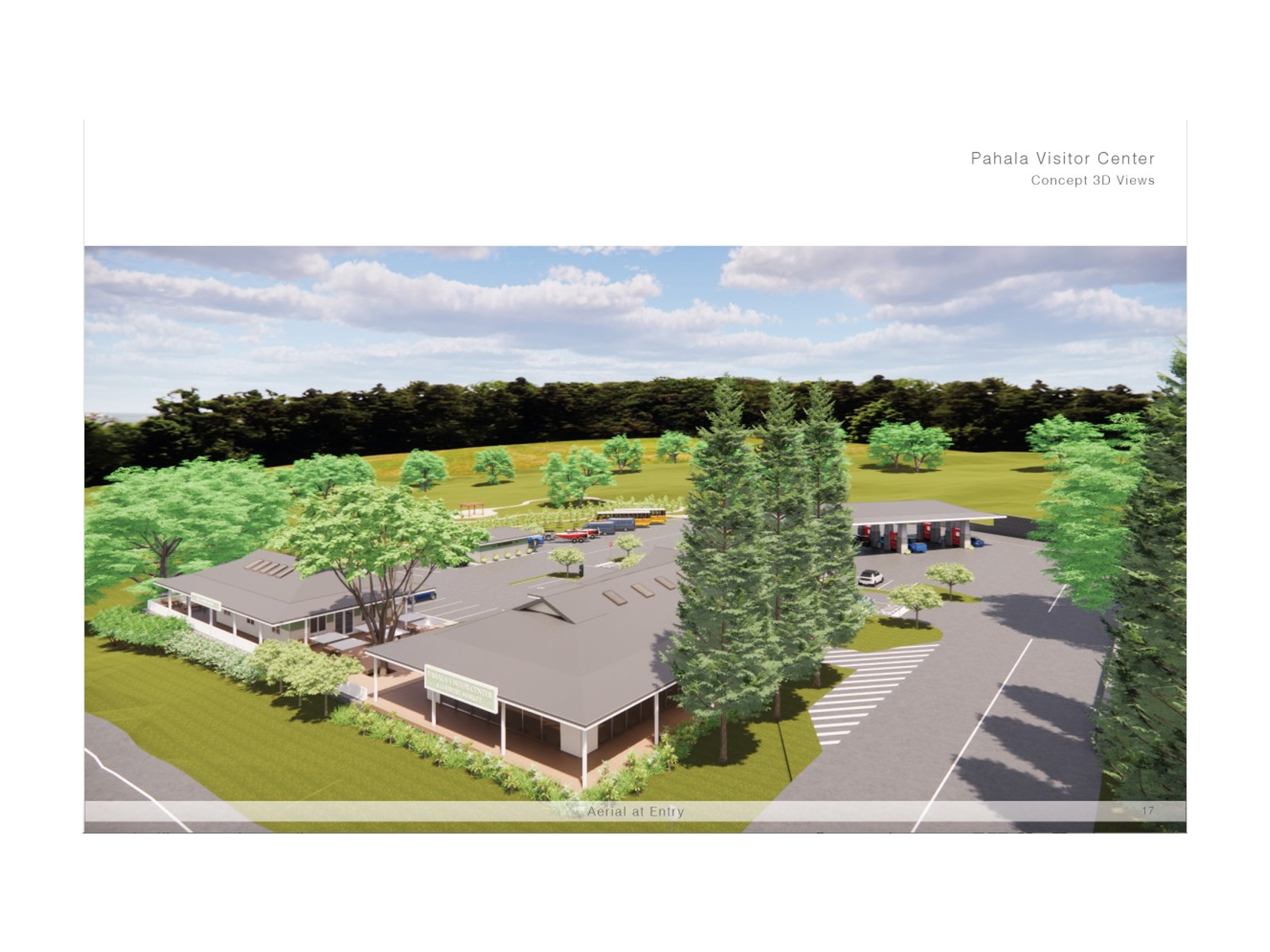
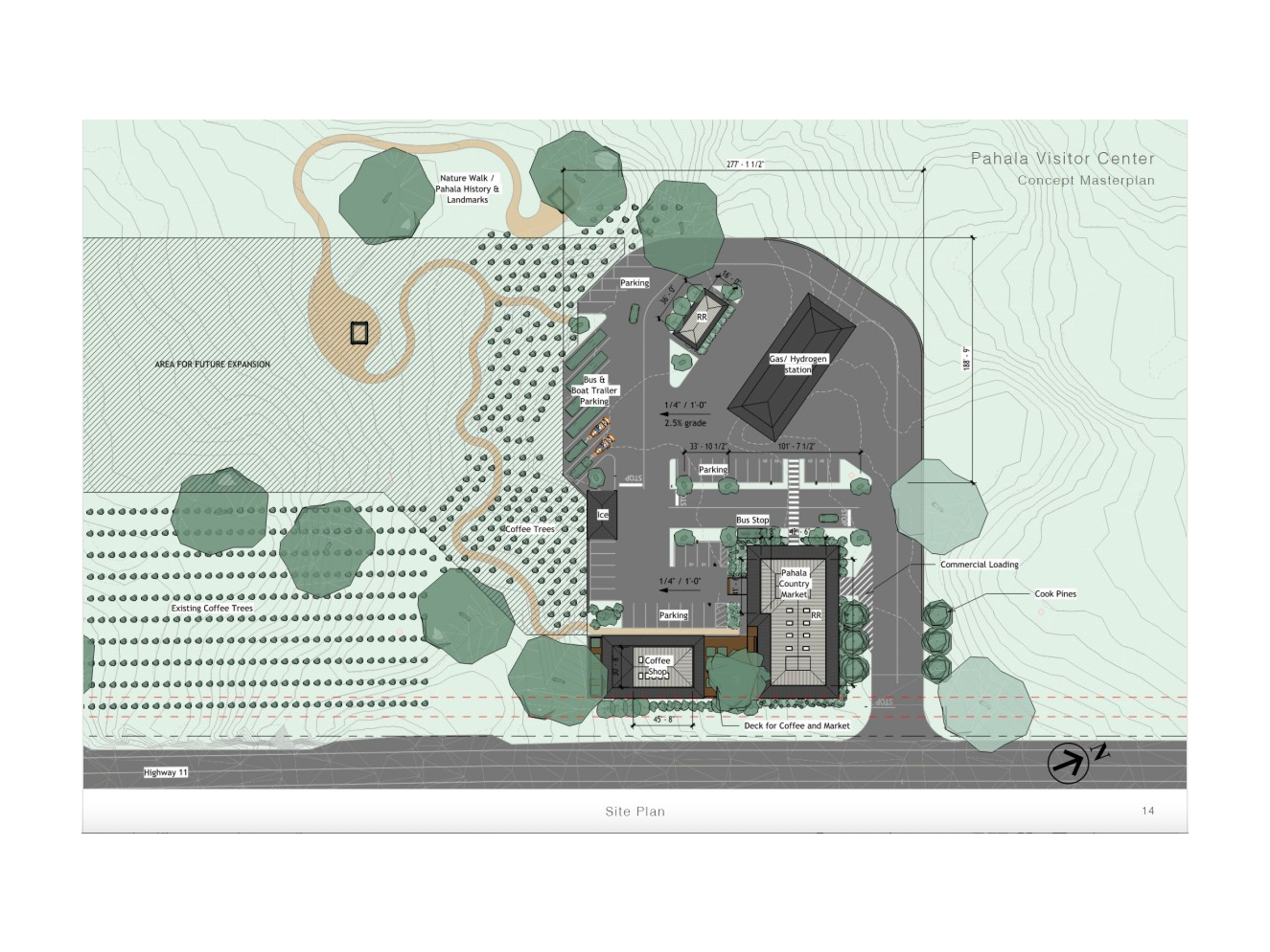
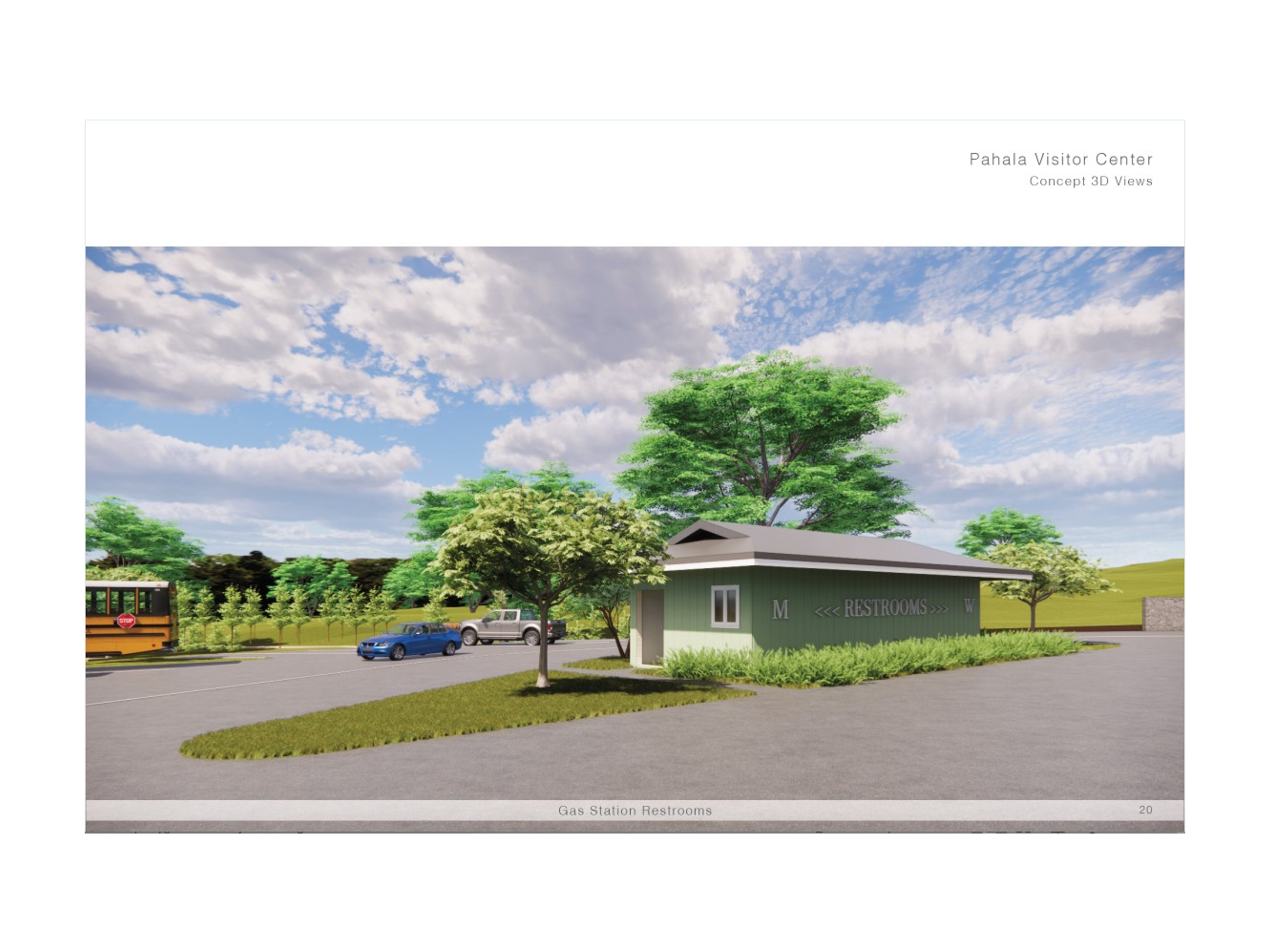
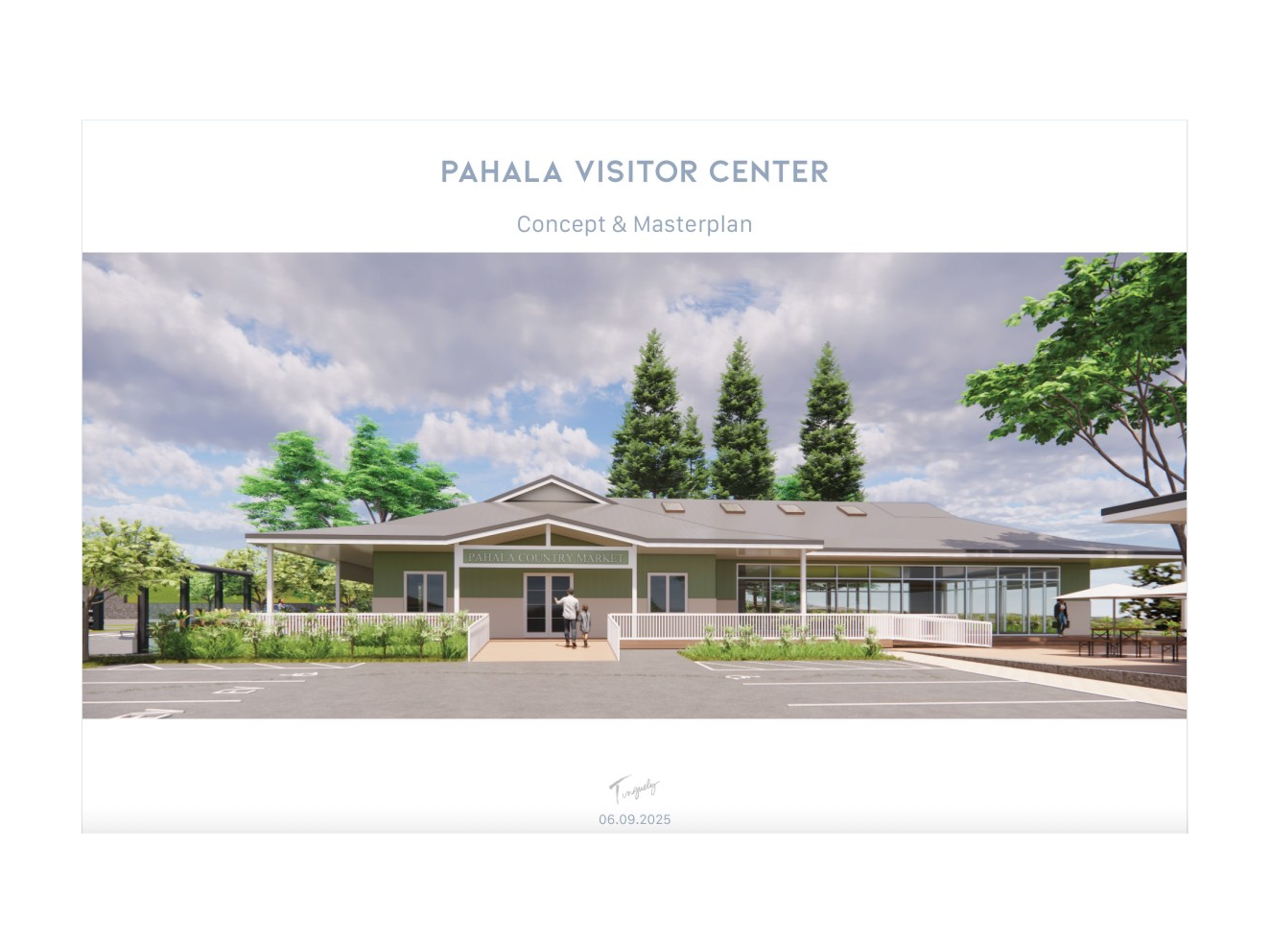
Kaʻū Community Development Plan (CDP) Action Committee members discussed a plan to develop a convenience store with hot food, coffee shop, fruit and vegetable market, a nature trail with cultural and historic interpretive signage, and gas station in Pāhala that will also have charging stations for electric vehicles.
The committee voted unanimously on Jan. 27 to combine two letters from members Kaweni Ibarra and Babette Morrow into one letter for discussion by the Committee at the next Action Committee meeting. The Olson Trust has asked for a letter it could use when approaching the Hawaii County Planning Department for the zoning changes it needs to construct the gas station/store.
The Olson Trust will be starting that process soon, Senior Land Manager John Cross told CDP committee members. The Trust is seeking a zoning change to allow for the development, which, Cross says, will “probably cover no more than about 3 acres.”
The Olson Trust had hoped to get buy-in for its Pāhala Center before approaching the Planning Commission and, eventually, the County Council, he said.
“We’re going to have people testify,” Cross said. “We hope people see this will be a good project and will benefit Ka‘ū and the community.”
The Pāhala Center is proposed for a narrow strip of land on Highway 11 near Kamani Street. It will offer a full complement of fuels, including an electric vehicle charging station as well as hot foods and Ka‘ū coffee.
But its land-use designation is currently low-density urban and also zoned for agricultural use, which doesn’t allow for commercial development. Cross said. The Olson Trust proposes to change the land-use designation to medium-density urban under the county’s Land-Use Pattern Allocation Guide, or LUPAG, and the zoning to commercial village.
“The rezone will probably cover more like 10 (acres),” he said. “But that will be vetted and adjusted by the planning director on how to best do the rezone so we’re allowed to build. What we would like to do is have a nice community center on the highway and provide services to the public, to provide jobs to the locals.”
The Pāhala Center will sit on part of a larger parcel that encompasses 87 acres total, according to Brenda Iokepa-Moses, the Olson Trust’s community and government liaison.
Following the meeting, Iopeka-Moses told Ka‘ū News that it had been about three years since the gas station in Pāhala closed.
In his Nov. 18 letter, Ibarra mentioned the Olson Trust’s community outreach on the project and stated that many residents noted that the area is a “viable place to provide the services” the Trust proposes.
According to his letter, while the Olson Trust is seeking land-use designation and zoning changes, the remaining 77 acres of the parcel it owns would keep its current low-density urban and agricultural designations.
“The services proposed by the Olson Trust, such as a fuel station, will provide desired services to the residents of Pāhala, who currently live at least 13 miles away from an accessible fuel station,” Ibarra wrote.
In her Jan. 10 letter, Morrow said that while she supported the project, she was concerned about its location, which is roughly a mile away from Pāhala’s town core at Kamani and Pikake streets. According to Morrow, the Pāhala Center’s proposed site is not safely walkable for local customers, including children and kupuna.
Morrow also noted that it’s not the Action Committee’s responsibility to decide whether or not to support a project, but to determine whether it complies with the Community Development Plan’s goals and policies.
“Input from the community has shown strong support for the proposed project, especially since it will provide needed jobs and services to the Pāhala area,” she wrote. “However, I would be more inclined to support the development as an AC member once I see an official application.”
During their discussion on Jan. 27, CDP Action Committee members weighed whether they were being asked to support the land-use designation and zoning changes or the project itself. Hawaii County Planner Maryam Palma, however, pointed out that while the Action Committee is tasked with ensuring projects align with the CDP’s goals and policies, any changes to the county’s land-use maps are up to the Planning Commission, County Council, and eventually the mayor, she said.
Palma noted that the letters from Morrow and Ibarra point out the proposed project’s inconsistencies in the Ka‘ū Community Development Plan, but also note the community’s support for the project.
Iopeka-Moses said the Olson Trust is not asking the Action Committee to recommend the zoning change. Instead, the Trust is hoping the Action Committee will tell the Planning Department and the Planning Commission that it supports the proposed project.
It was committee Chair Jason Masters who proposed combining the letters Ibarra and Morrow wrote, as both are in line with the Action Committee’s objective of ensuring that projects are aligned with the CDP’s goals and policies, and then the joint letter would be discussed at the next meeting, and then the Action Committee would vote on it.
“I feel that most of us are in support of the actual project itself, but that zoning portion, we don’t have control over it,” Ka‘ohinani Mokuhali‘i said. “That’s all we can do at this point, as our duties allow us to do, and then we can give you that letter so you (Olson Trust) can take that to your planning people.”
Mel Yokoyama, chairman and president of the Malama Ka‘ū Foundation, also offered to submit letters of support for the zoning change necessary for the Pāhala Center project to comply with the CDP.
Masters said his main concern is that the Pāhala Center’s proposed future home isn’t in an urban center, referencing Morrow’s statement about it being a mile from Pāhala’s town core. He said he hopes there’s a way the Planning Department could work with the applicant to resolve those concerns. “We were all teenagers at one point,” Masters said. “If there’s a store up the street, if you got to walk a mile to go there, you’re going to walk a mile to go there.”
The next CDP Local Action Committee is on March 24, location TBD.