
Stars Over Kaʻū: June 2025
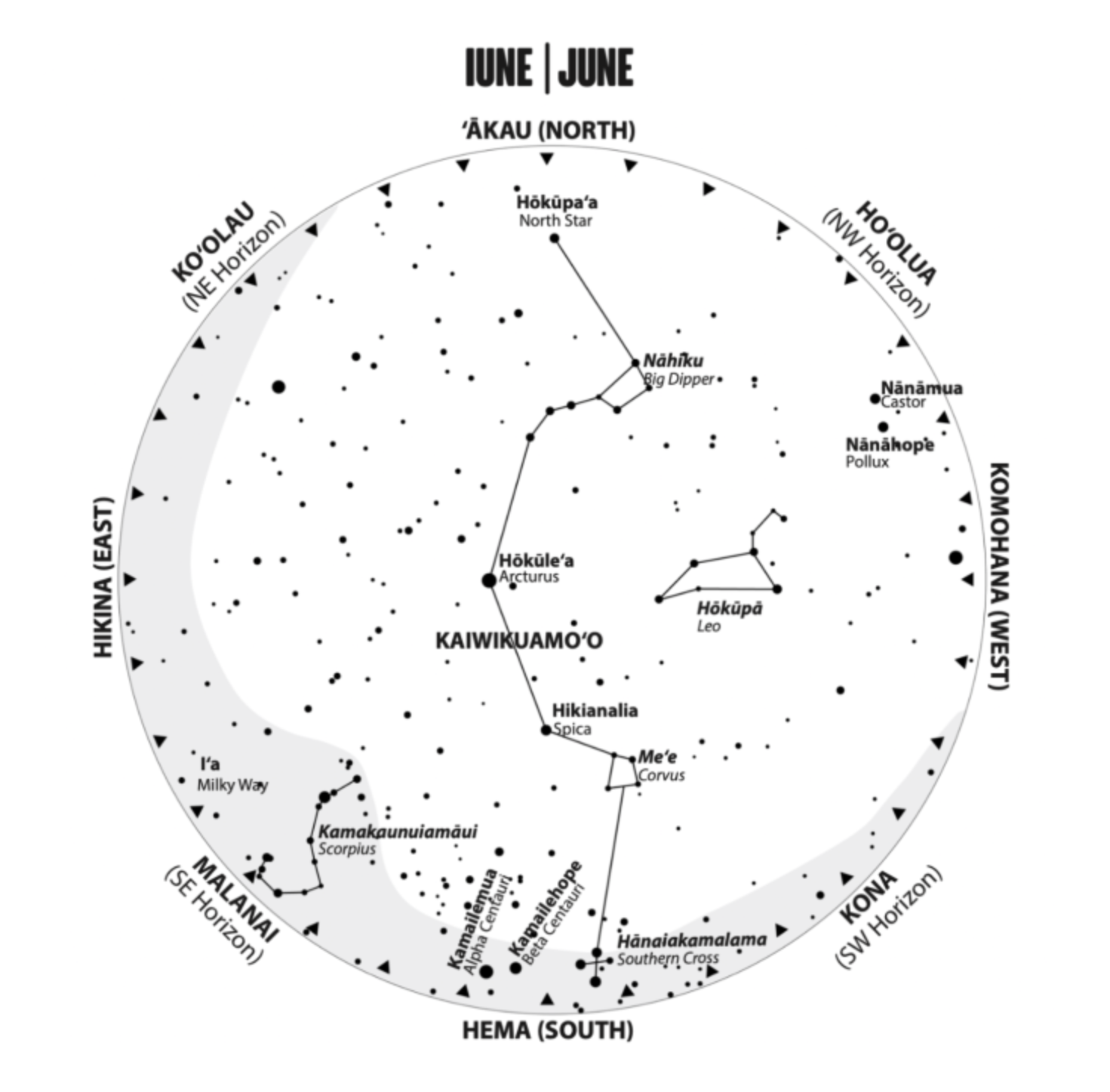
Image credit: ʻImiloa Astronomy Center of Hawaiʻi
By Christopher Phillips
Greetings stargazers! During July and August, keep an eye on the eastern sky before dawn for a gathering of celestial visitors. Mars (Holoholopinaʻau), Jupiter (Hōkūloa), and Saturn (Naholoholo) will be joined by Mercury (Ukalialiʻi) and, with the aid of binoculars or a small telescope, the distant worlds Uranus (Heleʻekala) and Neptune. Together they create a beautiful planetary display stretching across the morning sky.
A special treat occurs on July 4, when Mars passes very close to Uranus. Mars will shine much brighter than its distant companion, making it an excellent guide for locating the ice giant low in the predawn sky.
In the early evenings of July, Venus and Jupiter remain visible shortly after sunset, offering a nice contrast to the planets gathering before dawn. The highlight of the season arrives on August 12, when six planets — Jupiter, Mercury, Mars, Uranus, Saturn, and Neptune — form a grand planetary parade across the eastern and southeastern sky before sunrise. Look for the planets tracing a gentle arc from the horizon upward toward the south.
Just a few days later, on August 15, Jupiter and Mercury appear close together near the eastern horizon. Their conjunction makes both planets easy to spot during morning twilight. For the best views, find a location with a clear, unobstructed eastern horizon and begin observing about an hour before sunrise. Jupiter, Mars, Saturn, Venus, and Mercury are bright enough to be seen with the naked eye, while Uranus and Neptune will require optical aid. Clear skies and a little patience will reward you with one of the finest planetary displays of the year.
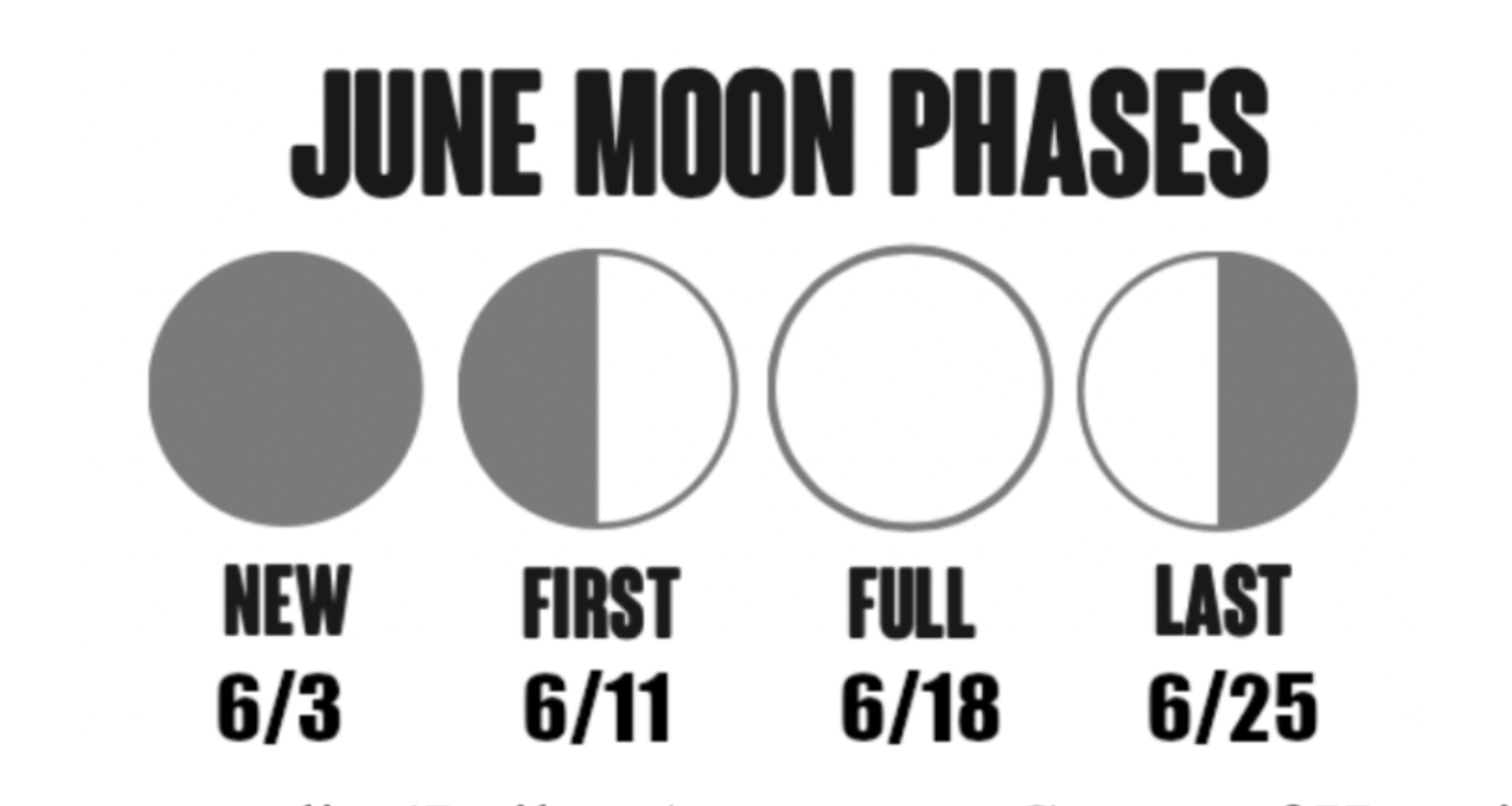
Image credit: ʻImiloa Astronomy Center of Hawaiʻi
Our Hawaiian Sky
Aloha Stargazers! This month offers a beautiful selection of planets visible both in the evening and early morning skies. Starting just after sunset, Mercury (Ukalialiʻi) appears low in the western sky. It stays close to the horizon and can be tricky to spot without a clear view. Just above Mercury, you'll find Jupiter (Ikaika), still visible in the west in early June, though it sinks lower each night and disappears into the twilight glow by month’s end. Mars (Holoholopinaau) shines higher above Jupiter in the evening sky, noticeable by its steady reddish hue, visible until around midnight. Turning to the pre-dawn skies, Venus (Hōkūloa) dominates the eastern horizon. Brilliant and unmistakable, Venus is now a morning star and rises well before sunrise. A bit higher and later, Saturn (Naholoholo) climbs into view in the southeast before dawn. These planetary appearances make for an excellent show throughout the month, especially when observed through binoculars or a small telescope. Whether you’re out at sunset or up before the birds, June’s sky has something for every stargazer.
Hubble at 35: A Legacy of Cosmic Discovery
This month, the Hawaiian starline of Ka Iwikuamo‘o (The Backbone) dominates our night sky. It is sometimes represented as the backbone of a great lizard or that of a genealogical backbone, with each star representing a generation. This magnificent starline begins in ʻĀkau (North) and extends from Hōkūpaʻa (Fixed star), which in western tradition is known as the North star, Polaris. Our starline extends all the way from Hema (South) to Hānaiakamalama (Cared for by the Moon), which is known as the Southern Cross. The line can be traced through the various constellations that make up Ka Iwikuamoʻo just as one can trace oneʻs own genealogy. A path from oneʻs self to oneʻs ancestors, back through time. Each set of stars is a unique entity with itʻs own identity.
When tracing our path toward Hema, we encounter Nā Hiku (The Seven), or the Big Dipper as it is known. We then encounter Hōkūleʻa (The star of gladness), known as Arcturus in the constellation of Boötes. Hōkūleʻa is a zenith star here in Hawaii, a star of prime importance to the Polynesian navigators as they chart their course home. Hikianalia is our next stop on our way south. You may recall that both of these stars, Hōkūleʻa and Hikianalia, are the names of the two famous voyaging canoes of the Polynesian Voyaging Society, both of which participated in the historic worldwide voyage. Further south still, and we encounter Meʻe, which you may know as the constellation of Corvus the crow.
We conclude our genealogical journey across the heavens from Ākau to Hema at a formation of stars known as Hānaiakamalama. We have charted not only the stars on our journey, but we have, metaphorically, charted a course through time and space, discovering our beginnings, our ends, and those that stood in the spaces in between.
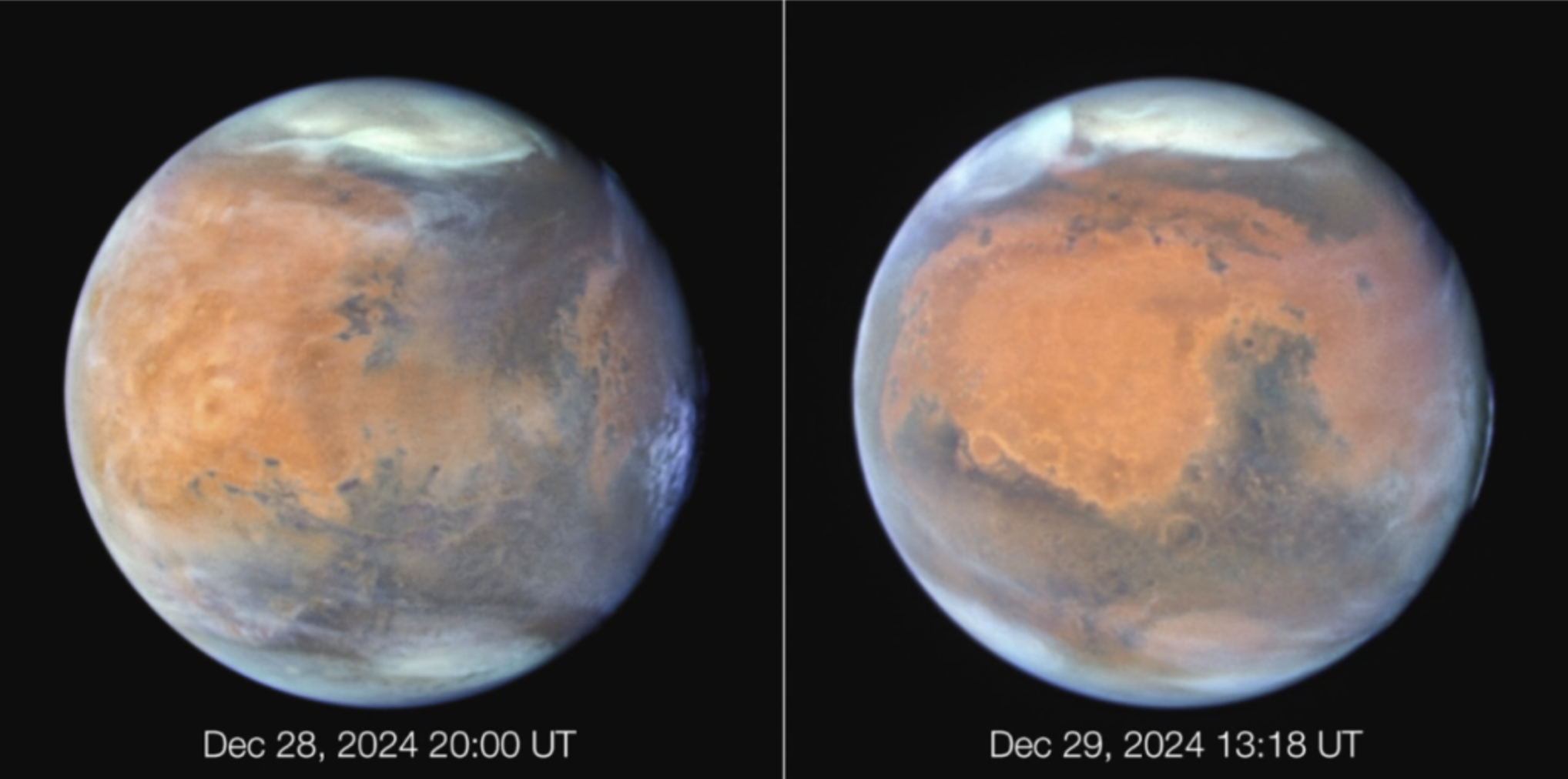
Clouds on Mars. Image credit: NASA/ESA
This month marks a monumental milestone in the realm of astronomy: the 35th anniversary of the NASA/ESA Hubble Space Telescope. Launched aboard the Space Shuttle Discovery on April 24, 1990, Hubble has since transformed our understanding of the universe, delivering breathtaking images and groundbreaking discoveries that have captivated both scientists and the public alike.
To commemorate this occasion, a series of newly processed images has been released, showcasing the telescope's enduring capabilities. Among these is a stunning view of Mars, captured in late December 2024, revealing delicate water-ice clouds that lend the Red Planet a frosty appearance. Hubble's unique ultraviolet imaging capabilities highlight these features, offering insights into Martian atmospheric conditions.
Another highlight is the mesmerizing planetary nebula NGC 2899. Located approximately 4,500 light-years away in the southern constellation Vela, this "moth-like" structure is sculpted by the outflow of gas from a dying star at its center. The intricate patterns of glowing hydrogen and oxygen gases create a vivid tapestry that illustrates the complex processes of stellar death.
The Rosette Nebula, a vast star-forming region spanning 100 light-years, also features prominently in the anniversary collection. Hubble's close-up captures a small portion of this nebula, revealing dark clouds of hydrogen gas laced with dust, silhouetted against a backdrop of glowing plasma. These structures are being eroded and shaped by the intense radiation from nearby young stars, offering a glimpse into the dynamic processes of star birth.
Beyond these images, Hubble's scientific contributions over the past three and a half decades are nothing short of extraordinary. The telescope has made nearly 1.7 million observations, examining approximately 55,000 astronomical targets. Its data have led to over 22,000 scientific papers and more than 1.3 million citations, underscoring its pivotal role in advancing our cosmic knowledge.
As we celebrate Hubble's 35 years in orbit, we also look forward to the continued exploration of the cosmos. The telescope's legacy paves the way for future missions, inspiring generations to gaze upward and ponder the vastness of the universe. Happy birthday, Hubble!
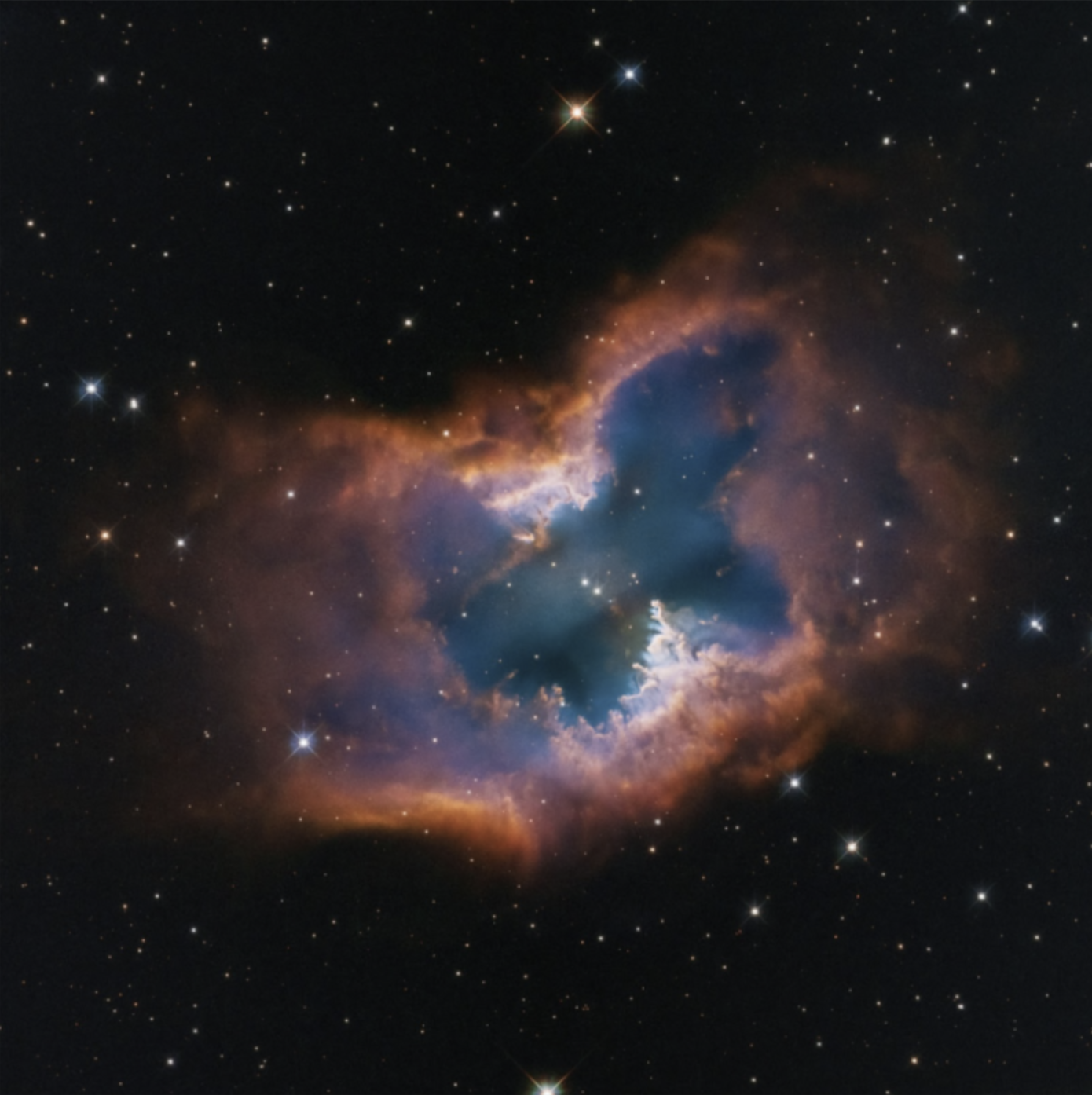
NGC 2899. Image credit: NASA/ESA
