Hoʻihoʻi i Ke Aupuni Hawaiʻi Through Genealogy
Finding Our Kūpuna in the Kūʻē Petitions
By Alexander Kalauokalani Peʻa
In 1897, only four years after the overthrow of the Hawaiian Kingdom government, more than 38,000 people across the Hawaiian Islands signed the Kūʻē Petitions in opposition to annexation. Entire communities organized by horseback, canoe, steam train, and foot to ensure the voice of the lāhui would be heard. Those signatures traveled from remote valleys, fishing villages, plantation camps, and volcanic districts all the way to Washington, D.C., where they helped defeat the treaty of annexation.
For many of us today, the Kūʻē Petitions are more than political documents. They are a map home. Each signature is connected to a district, an ʻohana, a church, a fishing community, or a place where our kūpuna once stood. When we search the petitions, we are not simply searching names on paper. We are searching for memory, belonging, and continuity.
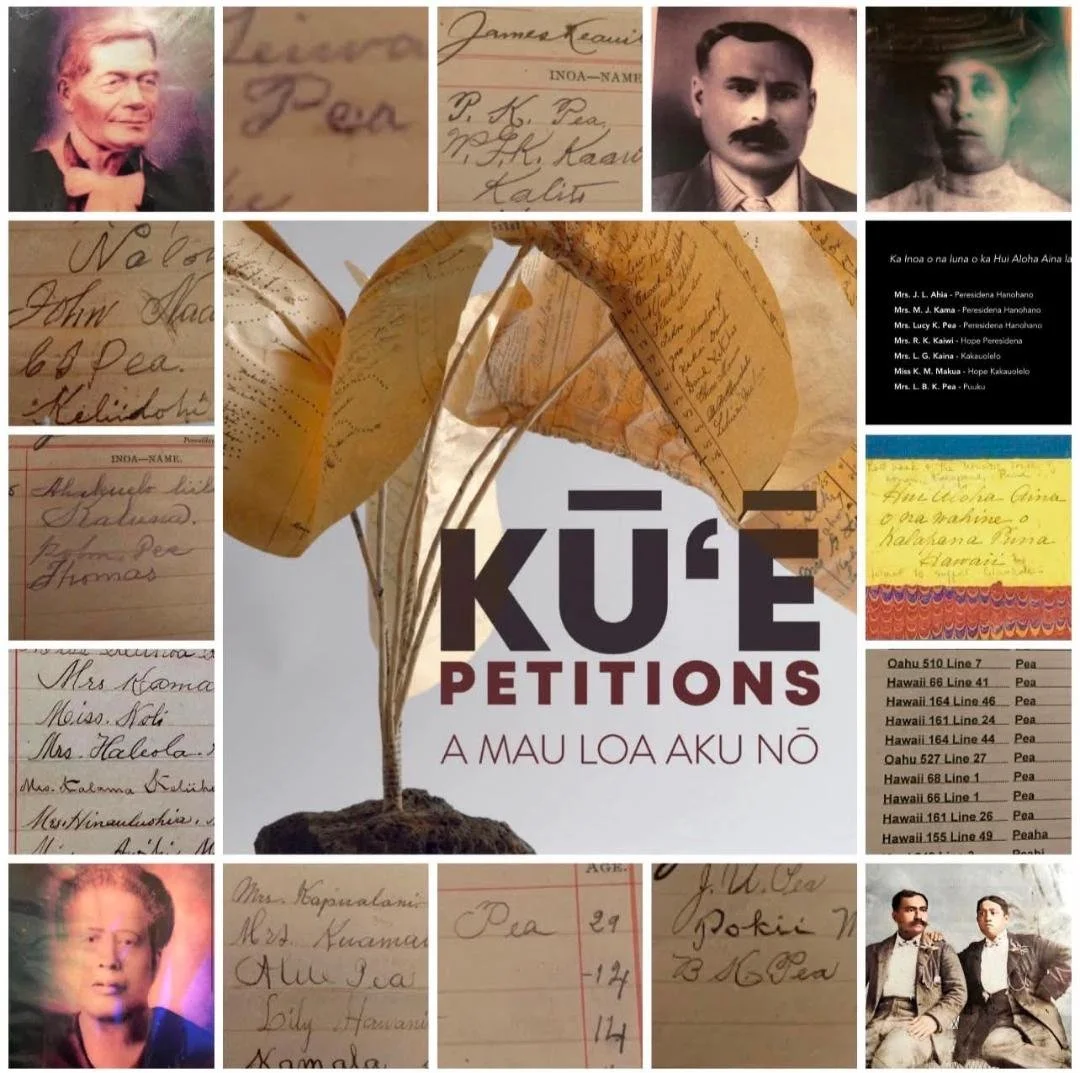
Like many Hawaiians, much of my early genealogy research first came through my Mormon ʻohana. But through the Kūʻē Petitions, I began discovering another side of my family that I had never fully known: my Catholic ʻohana from Puna. Growing up, I always believed the Peʻa ʻohana primarily came from Keaukaha. Yet after studying the petitions and working with professor Ron Williams, I discovered that members of the Peʻa family helped organize opposition to annexation in Puna itself. One Peʻa kūpuna served as treasurer. Another served as president within Hui Aloha ʻĀina o Puna. In the volcanic lands of Kalapana and Kaimū, our kūpuna gathered 101 signatures opposing annexation.
Imagine the determination that required. These were not wealthy businessmen or powerful politicians. These were everyday Hawaiians protecting their country, their future, and their national identity.
That discovery changed my life. The prolonged occupation and its institutions often portray Hawaiians as politically divided or fragmented. But the Kūʻē Petitions reveal something entirely different. There may be no other people on earth who demonstrated such overwhelming political unity in defense of their nation.
Think about that for a moment. Your kūpuna and my kūpuna, thousands across every island, stood together in opposition to annexation in every form. Riders crossed entire districts by horseback. Families traveled by boat and steam train. Hui Aloha ʻĀina chapters organized community by community to preserve Hawaiian independence. More than 95 percent of the Aboriginal Hawaiian population signed in opposition. And they won. The treaty of annexation failed.
That victory carries enormous historical and spiritual weight. Since no treaty of cession exists between the Hawaiian Kingdom and the United States, the Kūʻē Petitions remain one of the clearest expressions of the political will of the Hawaiian people. They are evidence that our kūpuna never willingly relinquished their country or their national identity.
For me personally, the petitions became more than genealogy records. They became a pathway back to identity. Through the petitions, I learned that some of my ʻohana lands were in Kaimū, the same area where the final scenes of Chief of War were filmed. I discovered connections to places I had never been taught belonged to my family. But more importantly, I found a deeper understanding of myself, not only as a descendant of Hawaiians, but as part of a living national continuity carried forward through generations.
This is why I encourage every family across Hawaiʻi to search for their kūpuna in the Kūʻē Petitions. You may discover where your family once lived. You may uncover old district ties, churches, fishing communities, or political leaders within your own bloodline. You may learn that your kūpuna gathered signatures, organized meetings, or helped lead Hui Aloha ʻĀina chapters in defense of Hawaiian independence.
But this journey is not only about land. The word ʻāina also means country. When we reconnect to genealogy, we reconnect not only to family lands, but also to our national story as Hawaiian subjects and descendants of a country our kūpuna fought to defend.
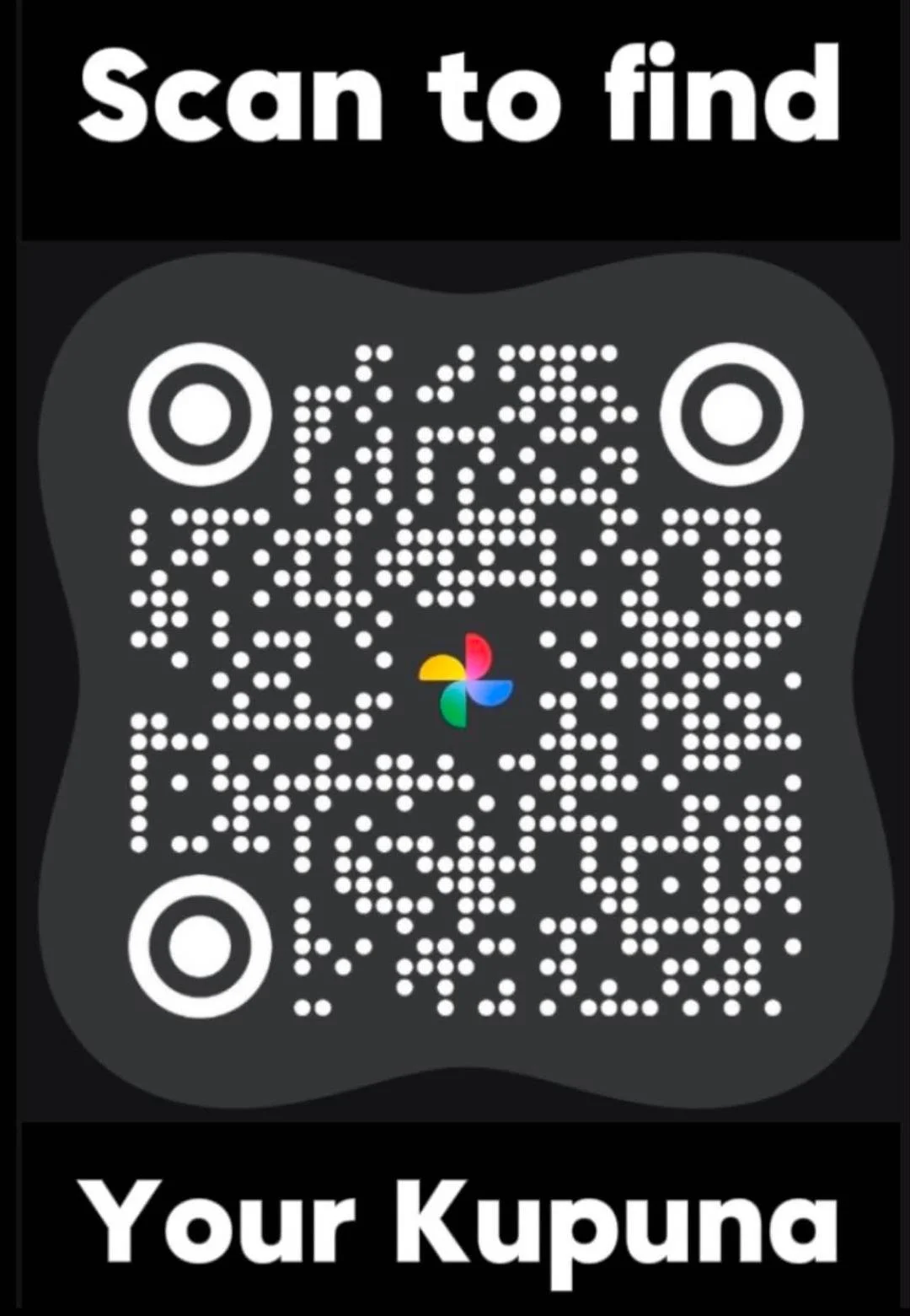
To help families search, I created a QR code system connected to the Kūʻē Petition records and Silva-Minton Index. The first pages explain how to navigate the index alphabetically and trace family names through signatures, districts, islands, page numbers, and line references connected to your kūpuna. FamilySearch can also assist, although spellings are sometimes inaccurate. For decades, dedicated researchers such as Clare Apana and many others involved with the Kūʻē Petitions project have continued working within the community to preserve and correct these records for future generations.
Every signature matters. Every name carries mana. Somewhere within those pages, your kūpuna may still be waiting for you to find them.