The Nature Conservancy Eyes Hilea Land Acquisition
By Jessica Andrews | Photos By The Nature Conservancy
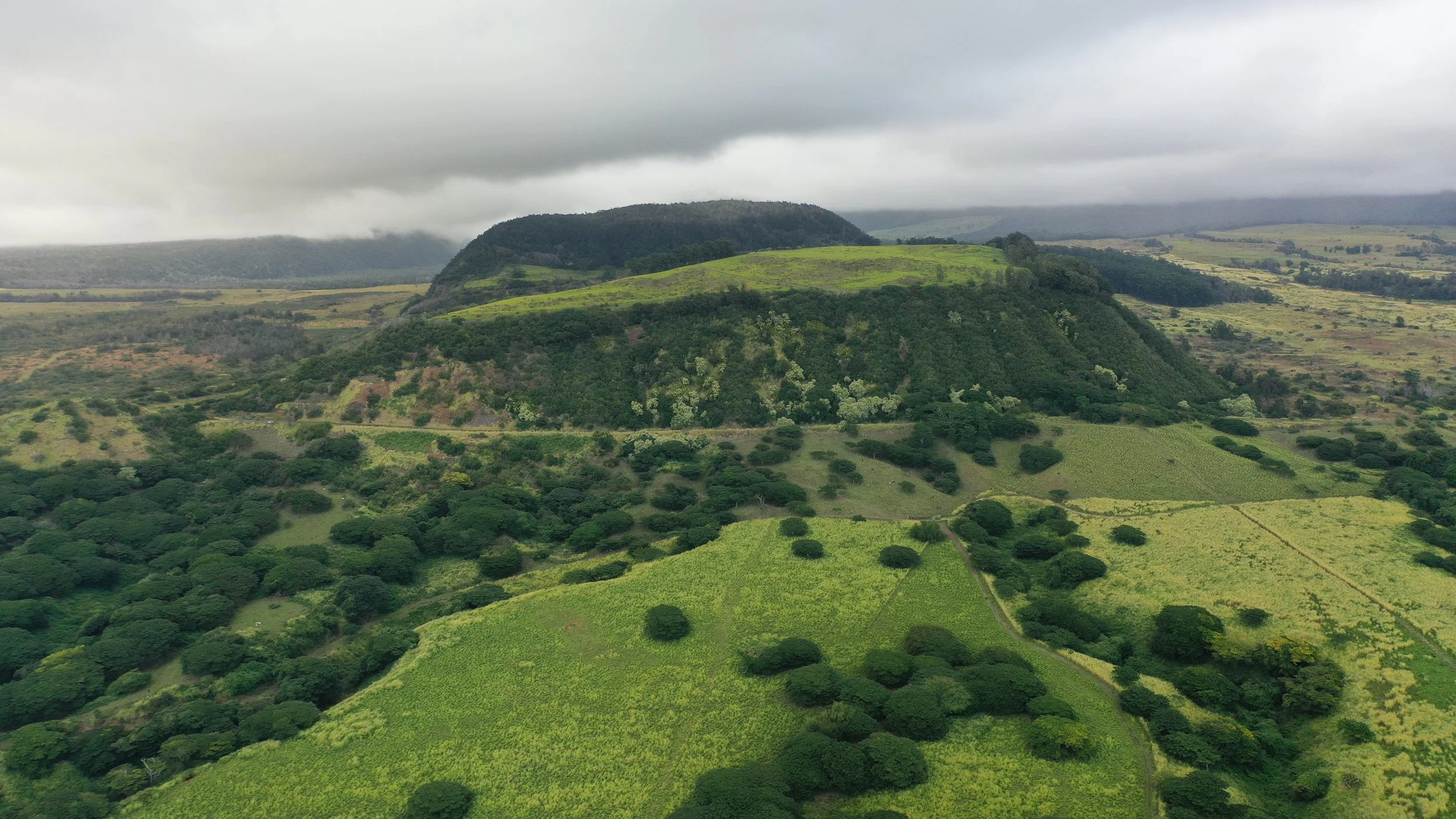
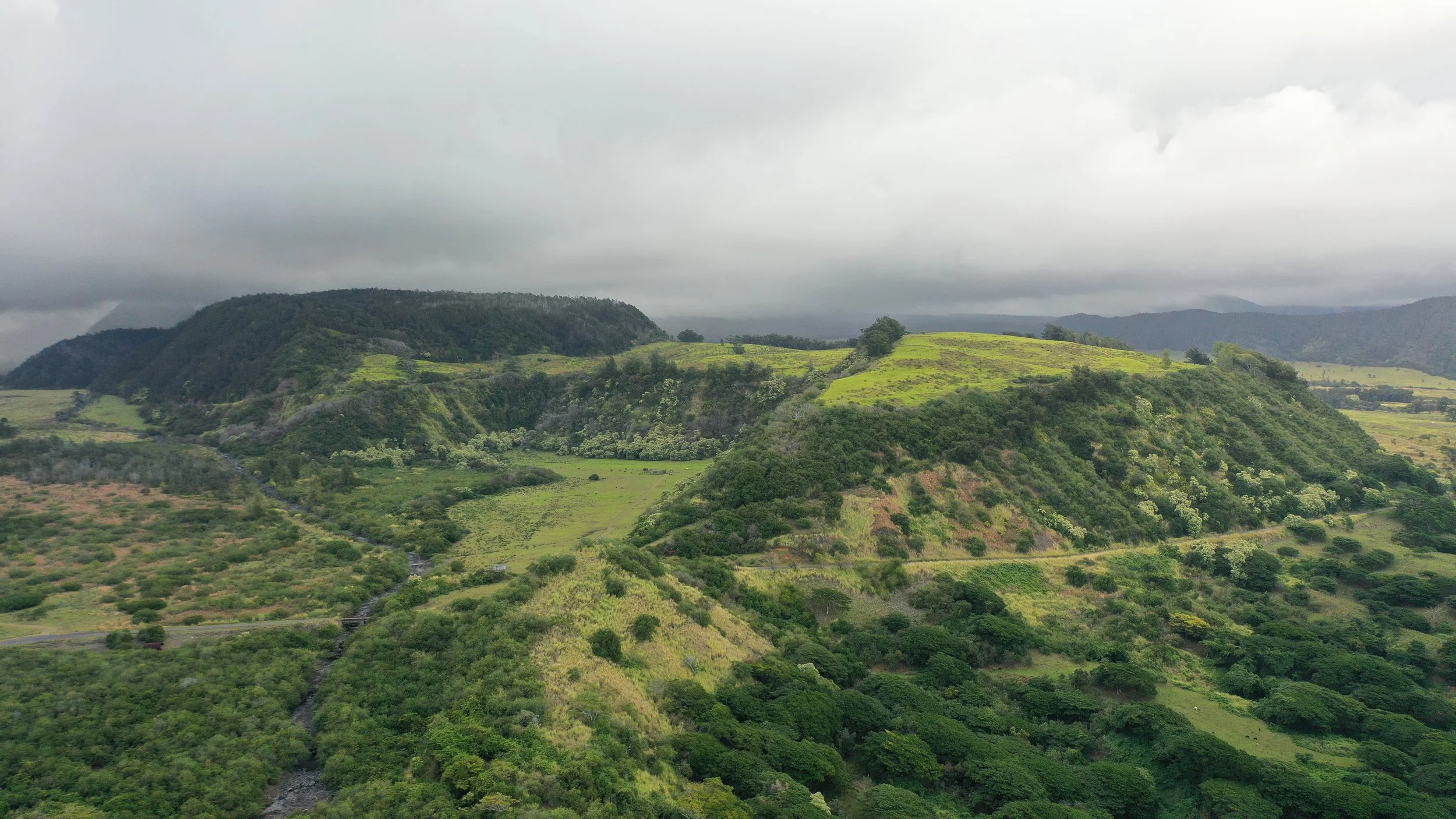
Shalan Crysdale pointed to the Kaʻū Community Development Plan to illustrate why The Nature Conservancy’s (TNC) proposed purchase of 1,960 acres of former sugar cane land near Makanau should be realized.
Specifically mentioning the plan’s objective to “expand the local system of preserves,” Crysdale, TNC’s Hawaiʻi Island program director, said the organization’s efforts to acquire the Hilea property would ensure the land is protected from development.
“A quick summary of what I think I read in that plan is we want to see Kaʻū stay Kaʻū,” he said during a March 24 conversation with Kaʻū News. “We want to see our coastline stay protected. We didn’t want to see our coastline developed like Kona had gotten. And we want to see our mountains protected. We didn’t want to see them become places where you start seeing these subdivisions spread up on the hills.”
The Hilea parcel is currently owned by the Olson Trust, which owns the Kaʻū Coffee Mill in Pāhala, and shares a one-mile boundary with land that The Nature Conservancy has already purchased as a preserve.
Three ranching operations owned by the Andrade, Johansen, and Galimba families currently lease the land.
According to Crysdale, Olson Trust representatives had initially contacted the ranchers to see if they were going to be able to purchase the property. However, when they couldn’t put in an offer, Crysdale said they reached out to The Nature Conservancy.
“(They said) ‘we don’t want to see it developed and we don’t want to see it purchased by an unfriendly entity’ like an out-of-state cattle operation or something that would come and displace them,” Crysdale said. “I think they’re looking at it from both ways: One is their own self-interest and keeping their leases on the property. At the same time, they’re saying, ‘we do want to see the future of Kaʻū maintained in a way that is in line with the vision the community has had for the place, which is to remain an open space.’”
In January 2025, TNC received $2 million from the Hawaiʻi State Legacy Land Conservation Program to go toward the purchase price of the Hilea parcel. The Nature Conservancy is also pursuing funding from the Hawaiʻi County Public Access, Open Space, and Natural Resources Preservation (PONC) fund.
The Nature Conservancy went before the PONC commission on March 9, Crysdale said. PONC commissioners are also expected to visit the proposed Hilea acquisition before deciding who to award funding to, he said.
However, as of March 24, the Olson Trust had yet to give The Nature Conservancy a purchase price on the property, according to Crysdale.
“What we do have from them is a letter of intent,” he said. “The letter of intent conveys that the landowner understands we’re looking at putting an offer forward, and we’ve done an appraisal so we have an idea of what the fair market value is. I’m not going to share it because we are in active negotiation, but the landowner has already shown and indicated to us that they’re comfortable with that dollar amount.”
Eight applicants are vying for about $23 million in PONC dollars this year, Crysdale said.
Crysdale and The Nature Conservancy presented the proposed Hilea acquisition to the Kaʻū Community Development Action Committee more than a year ago and took three commissioners on a site visit in July.
In November, commissioners Kaweni Ibarra and Catherine Williams, who along with former CDP committee vice chair Pernell Hanoa toured the property in July, reported what they learned from their visit.
“It was a good trip,” Ibarra told his colleagues in November. “They taught us about the hunting access program that they have. Community members can call them up or sign up to get hunting access, and they can use their property as well as the state reserve.”
Some of the concerns raised when The Nature Conservancy introduced the proposed acquisition focus on water diversion as well as access. According to Ibarra, there is a county road near the property.
Williams said she and Ibarra went to the waterfall on the property and saw that there was no water diversion taking place on TNC land. There was also extensive replanting of native ʻōhiʻa.
“It was important to see it with our own eyes, and I think the work they’re doing is invaluable,” Williams said. “They’re bringing back a lot of the native species into the forest. They’re doing a lot of work around keeping the pigs out and also with the hunting licenses — it was really amazing to see how much work they’re doing.”
Despite Ibarra and Williams’ positive report about their visit to the Hilea site, at the Jan. 27 CDP meeting, Commissioner David Kuahiwinui remained skeptical, saying he wants to know what The Nature Conservancy really wants to do with the land.
According to him, public access to the parcel has been blocked without any notification. Kuahiwinui also noted concerns regarding ranching lease revenue if those funds go to The Nature Conservancy.
“If TNC is asking for $2 million to purchase that land and they’re going to lease out the land to the ranchers, all that money is going to go into The Nature Conservancy,” he said. “Why not go back to the county? That is my concern. Why does the money go to the TNC when it wasn’t there from the beginning?”
If TNC does become the landowner, the three ranching families would keep their leases, and grazing lease payments would go toward the cost of managing the land, “due to IRS law for 501(c)(3) nonprofits,” Crysdale said.
“We don’t collect lease payments for the grazing that happens at Kaiholena currently and instead take payment as in-kind contributions from the rancher,” he said, referring to about 2,000 acres of TNC land that borders the Hilea property. “Examples [include] road grading and repair, hauling TNC equipment, and preparing graded pads for helicopter landing zones and water tanks. We keep a tally of work contributed each year and estimate the dollar equivalent as an in-kind match.”
Crysdale said he felt Kuahiwinui’s questions on Jan. 27 weren’t informed by the trip his colleagues took last summer. There are currently seven sets of crossovers over the fence that allow access to the property, as well as a trail network that will be maintained.
There’s also a hunting access program that The Nature Conservancy has been operating since 2007, which Crysdale said has been successful. The program allows for first-come, first-served access that allows hunters to get through the combination locks on the paved road onto the Hilea property, he said.
“You go about two miles, and you get to the TNC preserve and the forest edge,” he said. “That access program gives you the combination for those two locked gates that would get you into the forest.”
Crysdale said he had planned to speak further about the Hilea acquisition at the CDP meeting on March 24, but county planning staff told him it was not going to be on the agenda.
While he said he felt it was unfortunate, Crysdale also mentioned that at a later point in the January meeting, County Planning Director Maryam Palma said commissioners are tasked with making sure a potential project aligns with the Community Development Plan. Crysdale reiterated that the plan calls for expanding the system of public preserves, particularly Kaʻū’s mauka lands.
“This is our effort, and this is why I went to the CDP,” he said. “I think we’re working on behalf of the community development plan and on behalf of the community.”